

In 1982, sponge divers working off the coast of Uluburun near Kas in southwestern Turkey reported an anomalous seabed formation at roughly 43 meters depth. Excavation by the Institute of Nautical Archaeology, conducted between 1984 and 1994 under the direction of George Bass and Cemal Pulak, revealed a 14th-century BCE merchant vessel carrying ten tons of Cypriot copper in the standardized oxhide ingot form, one ton of Cretan tin, ebony and African blackwood from Egypt, blue glass ingots from Canaan, Canaanite storage jars containing terebinth resin, Baltic amber, ostrich eggs, hippopotamus ivory, gold and silver jewelry, pottery from Cyprus, Canaan, Egypt, and mainland Greece, and a gold ring bearing the cartouche of Nefertiti. No single port produced or consumed all of those goods. The Uluburun ship was operating within a coordinated network of ancient trade routes so deeply integrated that a single cargo could represent the productive capacity of a dozen distinct regions across two thousand kilometers. That network was not the result of individual enterprise or fortunate accident. It was built and maintained through specific institutions: relay merchants, standardized weights, enforced measures, posted tolls, professional pilots, and a shared expectation that contracts would be honored even across language lines. This post examines how those institutions actually worked, using archaeological evidence and surviving texts to move beyond the romance of the Silk Road and into the practical mechanics of ancient commercial life.
Bronze Age Networks: How the First Long-Distance Systems Were Built
The Late Bronze Age, roughly 1600 to 1200 BCE, produced the first documented long-distance commercial networks in the Mediterranean and Near East, and their organizational sophistication continues to surprise historians. The Amarna letters, a diplomatic archive of clay tablets found at the Egyptian capital of Akhetaten in 1887 and now distributed between the Egyptian Museum in Cairo and the Vorderasiatisches Museum in Berlin, preserve royal correspondence between the pharaohs Amenhotep III and Akhenaten and the rulers of Babylon, Assyria, Hatti, Mitanni, Alashiya (probably Cyprus), and the Canaanite city-states. Much of this correspondence concerns the movement of specific commodities, including gold, copper, glass, lapis lazuli, horses, and fine textiles, through formal gift exchange networks that used the language of brotherhood and friendship while functioning as state-to-state trade managed by specialist merchants called tamkaru.
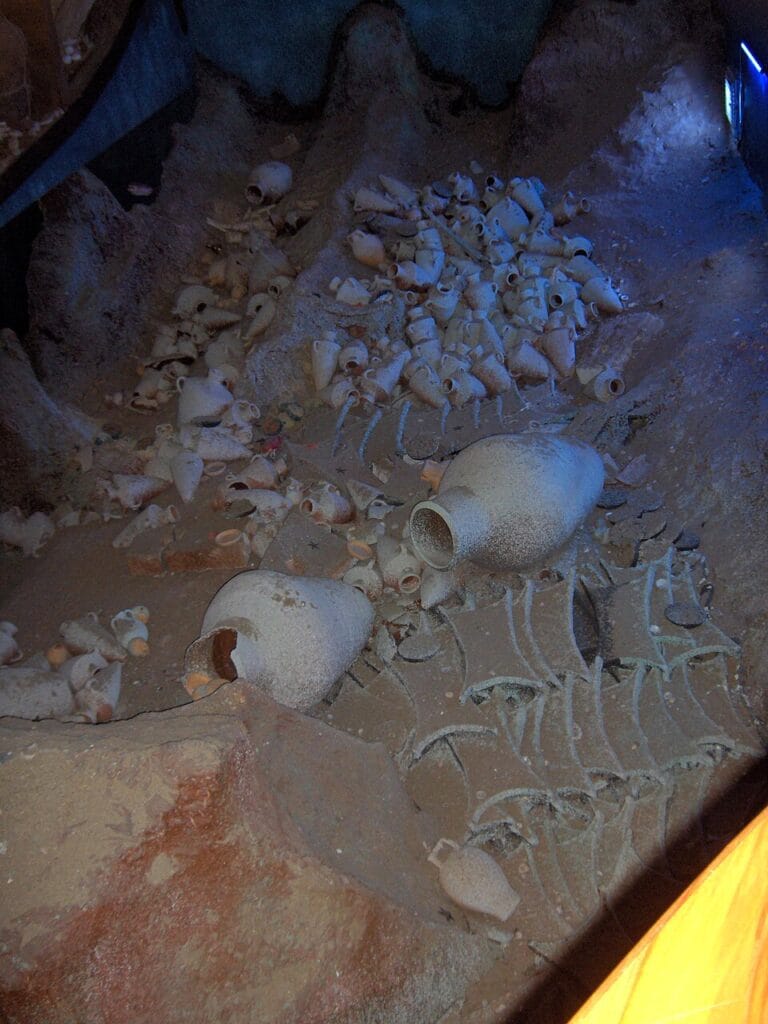
The Uluburun wreck’s cargo confirms what the Amarna archive implies: Bronze Age long-distance trade was organized around relay merchants who moved specialized goods between ports where they were loaded onto onward carriers. The ship itself was probably Canaanite, based on the predominance of Canaanite storage jars and the presence of a pair of pan-balance weights in the Syro-Palestinian shekel standard, but it carried goods from at least seven distinct cultural regions. Cemal Pulak has argued that the cargo does not represent a simple exchange between two trading partners but rather a consignment assembled across multiple ports and destined for distribution at a destination we cannot now identify. That kind of multi-origin, multi-destination cargo structure implies professional freight agents, written contracts or their equivalents, and enough mutual trust between participants that high-value goods could be consigned to a captain you might never meet again. The Uluburun ship sank with all of this intact, which is why it remains the single most informative source we have for the organizational structure of Bronze Age Mediterranean commerce.
The Mechanics of Overland Movement: Caravans, Waystations, and Intelligence
Overland trade across desert and steppe worked through relay logic rather than long-distance individual enterprise. A merchant who attempted to carry goods from Mesopotamia to the Mediterranean in a single journey would face insurmountable problems of animal endurance, water supply, security, and capital exposure. The practical solution, documented across multiple ancient cultures, was to move goods in short stages between market towns where they could be sold to local agents who knew the next segment of the route. The Old Assyrian trading colony (or karum) at Kanesh in Anatolia, active roughly between 1950 and 1750 BCE and extensively excavated by the Turkish Historical Society since 1948, has produced over 22,000 clay tablet business records that allow historians to reconstruct the mechanics of this system in unusual detail. Merchants based in the Assyrian city of Ashur organized joint-stock partnerships (naruqqum) to fund textile and tin consignments carried to Anatolia by professional carriers (paddanum) who worked on commission. The tablets record insurance arrangements, dispute settlements, and detailed accounting of goods lost to bandits or spoilage, demonstrating a commercial infrastructure sophisticated enough to manage risk across journeys of over 1,000 kilometers.
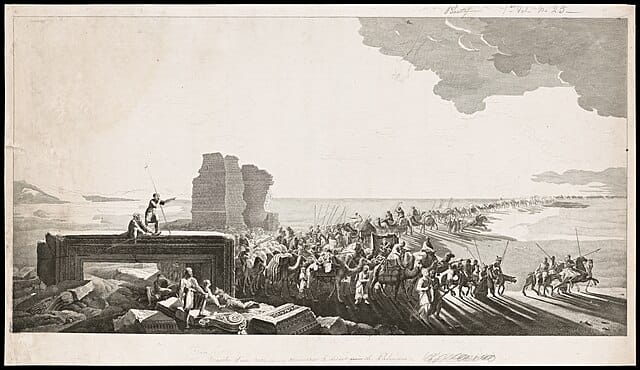
Palmyra’s position in the Syrian steppe, at an oasis with reliable wells roughly equidistant between the Euphrates and the Mediterranean coast, made it the natural relay point for east-west caravan traffic from at least the 1st century BCE through the 3rd century CE. The city’s commercial inscriptions, primarily in Palmyrene Aramaic with some Greek, record the activities of merchant families that maintained offices simultaneously in Palmyra, Seleucia on the Tigris, the Persian Gulf port of Spasinou Charax, Dura-Europos, and Alexandria. The Palmyrene merchant Soados, active in the 2nd century CE and commemorated by a bilingual honorary inscription in the Palmyra Museum, personally organized armed escort services for multiple caravans between Palmyra and Mesopotamia, funded the construction of a public building in Palmyra, and received honorary citizenship from the city in recognition of services rendered. His career illustrates how caravan commerce at the highest level blended logistics management, security provision, political networking, and genuine civic investment in a way that made the most successful merchants essential to the communities through which they operated.
Monsoon Sailing and the Indian Ocean Network
The Indian Ocean trade network was arguably the most sophisticated long-distance commercial system of the ancient world, and it depended entirely on accurate knowledge of a meteorological phenomenon: the reversal of the monsoon winds. The southwest monsoon blows reliably from Africa and Arabia toward the Indian subcontinent from roughly May through September; the northeast monsoon reverses that flow from approximately November through March. Ships that understood this cycle could time their departures to ride favorable winds on both outward and return voyages, reducing the journey from the Red Sea to South India from months of coastal crawling to approximately 40 days of open ocean sailing. Hippalus, a Greek navigator, is credited in ancient sources with being the first to exploit this cycle deliberately, probably in the 1st century BCE, though Indian Ocean sailors from both the Arabian Peninsula and the Indian subcontinent had likely been using monsoon timing for centuries before Greek merchants became aware of it.
The Periplus Maris Erythraei, a Greek merchant’s guide to Indian Ocean ports probably written in the mid-1st century CE and studied exhaustively by Lionel Casson of New York University in his 1989 Princeton University Press edition, describes the ports, commodities, and seasonal trading windows of the entire Indian Ocean rim from East Africa through Arabia, the Persian Gulf, and the Indian subcontinent to the Bay of Bengal. The text specifies which goods were available at each port, what the local currency accepted, whether the ruler was friendly to merchants, and critically, which months were best for arrival and departure based on wind patterns. It is less a travel narrative than a professional handbook, written by someone who had personally visited most of the ports described and wanted to save colleagues from the kind of expensive mistakes that came from arriving at a monsoon port in the wrong season and finding the harbor full of ships that could not depart for four months.

The port of Berenice on Egypt’s Red Sea coast, excavated by Steven Sidebotham of the University of Delaware beginning in 1994, served as the principal Roman entrepôt for Indian Ocean trade from the Ptolemaic period through the 5th century CE. Excavations have recovered pepper and spices in quantities sufficient to represent large-scale commercial importation, Indian pottery, coins from South India and Sri Lanka, and, most revealing, a Tamil Brahmi inscription on a pottery sherd identifying its owner as a Tamil merchant resident in Berenice. Sidebotham’s work demonstrates that the Indian Ocean trade network was not a simple Roman import operation but a genuinely bilateral commercial system in which South Asian merchants maintained permanent or seasonal residences in Egyptian ports while trading alongside their Roman counterparts.
Built out of a love for history, kept free from distractions.
Spoken Past is an independent project shaped by curiosity, care, and long hours of research. Reader support helps keep it maintained, carefully researched, and open to everyone.
What Moved and Why: The Commodity Logic of Ancient Trade Routes
The commodities that moved along ancient trade routes were not random. They followed a logic determined by the intersection of geographic production monopolies with demand that could not be satisfied locally, and by weight-to-value ratios that determined whether goods could bear the cost of long-distance transport. Tin is the clearest case. Bronze Age bronze requires approximately a 10:1 ratio of copper to tin, and tin deposits in the ancient Near East are extremely limited. The nearest substantial tin sources to the Bronze Age Mediterranean were in Cornwall in southwestern Britain, the Erzgebirge mountains on the modern Czech-German border, and in Afghanistan. This geographical fact explains why tin appears in the Uluburun cargo alongside Cypriot copper: the two metals had to travel from opposite ends of the ancient world to meet in a bronze-working center, and managing that movement required professional intermediaries across thousands of kilometers.
The Roman grain trade operated on a different commodity logic: the grain itself was relatively low in value per unit weight, which meant that the economics of shipping it worked only at very large volume on very large vessels. The Grain Supply (Annona) of Rome, which fed a city of approximately one million people from the 1st century BCE onwards, required an annual delivery of roughly 400,000 tons of grain, primarily from Egypt and North Africa. Augustus created the position of Praefectus Annonae to manage this supply, and successive emperors built dedicated granary facilities at Ostia and Rome capable of storing several months’ supply against disruption. The state subsidy of grain shipping, which took the form of reduced customs duties and insurance guarantees for merchants carrying grain on the Annona routes, was calculated to make the economics of bulk grain transport viable for private carriers who would otherwise have preferred higher-margin luxury cargoes.
Standards, Trust, and the Infrastructure of Exchange
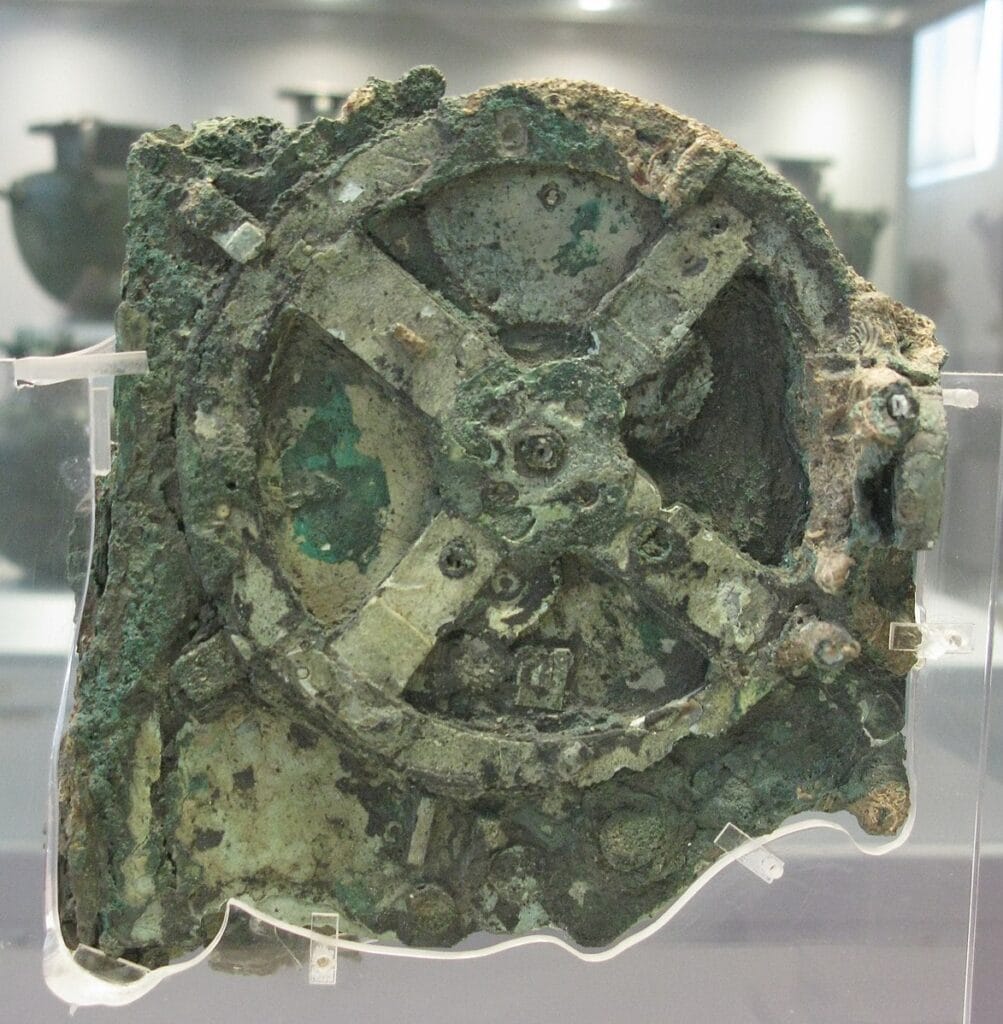
Long-distance trade collapses without shared standards, because the fundamental transaction, exchanging a known quantity of one commodity for a known quantity of another, requires that both parties have confidence in the measurements being used. The archaeological evidence for ancient weight standardization is extensive and consistent in its implications. Nested sets of bronze weights found at Pompeii conform to the Roman libra standard within approximately 0.5 percent accuracy. Pan-balance weights recovered from Late Bronze Age sites across the eastern Mediterranean show that at least four different weight standards were in simultaneous use, with merchants carrying sets of weights calibrated to the local standard of each port they visited. The Uluburun wreck contained weights in the Syro-Palestinian shekel standard, the Aegean standard, and at least two others, confirming that its captain was equipped to weigh and measure cargo for transactions in multiple different currency systems.
Trust was also constructed through institutional mechanisms beyond weights. Sealed clay bullae, lumps of clay impressed with a distinctive seal and attached to goods during transit, identified the consignor of a shipment and allowed recipients to verify that the package had not been tampered with in transit. Thousands of these bullae have been found at sites across the ancient Near East, their impressions preserving the private seals of merchants who are otherwise unknown to history. The practice of temple arbitration, in which disputes between merchants of different nationalities were settled by appeal to the impartial authority of a deity recognized by both parties, appears in texts from Mesopotamia, Egypt, and the Levant across more than two millennia. When we see sanctuaries near harbor districts and at caravan way-stations, we should read them as commercial infrastructure as well as religious architecture: they provided a neutral jurisdiction for the settlement of disputes that no single city’s law could otherwise adjudicate.
When Ancient Trade Routes Failed: Disruption, Adaptation, and Resilience
Ancient trade networks were not static systems that either functioned or collapsed. They were elastic structures that adapted to disruption by rerouting, substituting commodities, and developing new institutional arrangements. The Late Bronze Age collapse of roughly 1200 BCE, which destroyed or severely disrupted palace economies across the eastern Mediterranean, is the most dramatic documented failure, but its effects on trade were more complex than the traditional narrative of total collapse suggests. Eric Cline of George Washington University, writing in his 1177 B.C.: The Year Civilization Collapsed (Princeton University Press, 2014), has argued that the collapse resulted from the intersection of multiple stressors simultaneously, including drought, earthquake, internal rebellion, and the disruption of the specialized supply chains on which palace economies depended. The collapse eliminated the palace-administered trade networks but did not eliminate commerce: Iron Age Phoenician merchants built new, more decentralized trading networks across the Mediterranean within roughly two centuries, using different organizational structures and different commodity mixes than their Bronze Age predecessors.
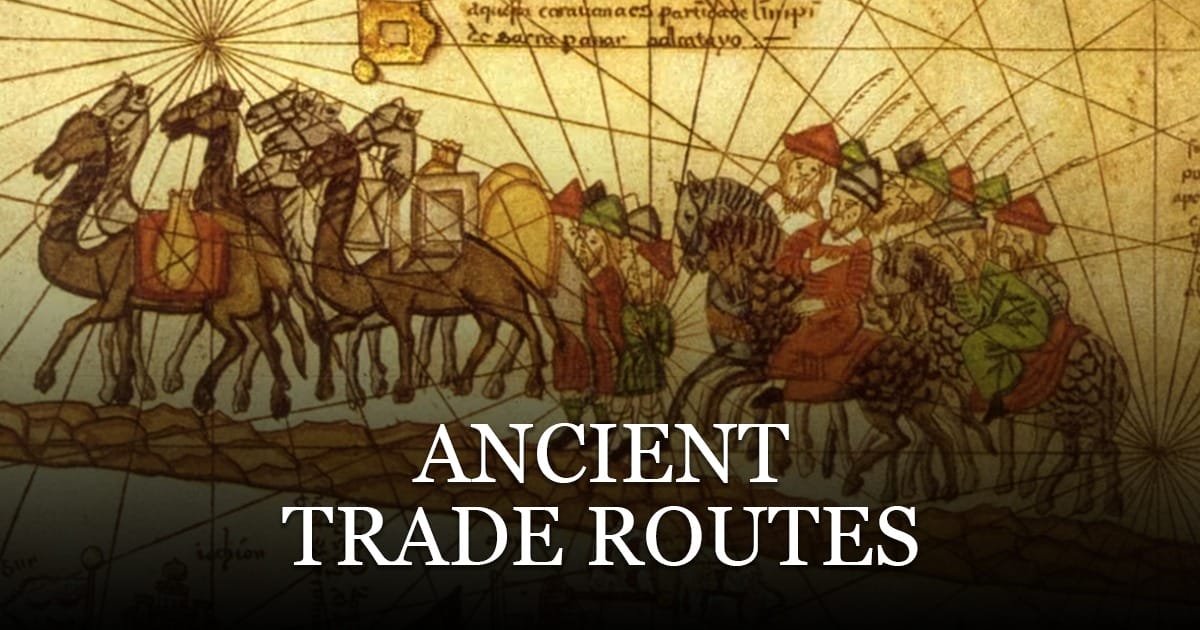
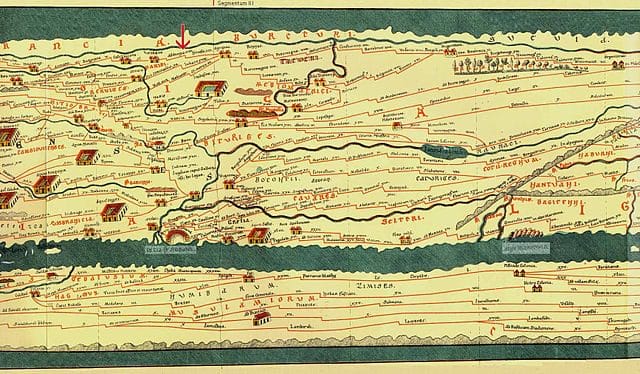
The resilience of ancient trade networks is best understood through the cases where disruption did not lead to permanent collapse. The Silk Road, a misleading modern name for a collection of overlapping caravan routes connecting China, Central Asia, Persia, and the Mediterranean, was disrupted repeatedly by political instability in the Central Asian steppe but always reconstituted along slightly different paths when conditions improved. Valerie Hansen of Yale University has argued, in her study of Silk Road archaeology based on finds from Dunhuang, Turfan, and related sites, that the Silk Road’s resilience derived from its decentralized structure: no single state controlled enough of it to make the failure of that state fatal to the whole system. When the Tang dynasty’s control of Central Asia collapsed in the 750s CE under pressure from the Tibetan Empire and the Abbasid Caliphate, trade did not cease but rerouted through maritime lanes and alternative overland corridors within a generation. The physical infrastructure of roads, caravanserais, and water points was partially maintained by local communities whose economic survival depended on through traffic, independent of the political authority of any distant empire.
Sources: Cemal Pulak, “The Uluburun Shipwreck: An Overview,” International Journal of Nautical Archaeology 27.3 (1998), pp. 188-224; Lionel Casson, The Ancient Mariners (Princeton University Press, 1991); Lionel Casson, ed. and trans., The Periplus Maris Erythraei (Princeton University Press, 1989); Steven Sidebotham, Berenice and the Ancient Maritime Spice Route (University of California Press, 2011); Eric Cline, 1177 B.C.: The Year Civilization Collapsed (Princeton University Press, 2014); Klaas Veenhof, “The Old Assyrian Merchants and Their Clients,” Iraq 39.1 (1977), pp. 93-111; Valerie Hansen, The Silk Road: A New History (Oxford University Press, 2012).