

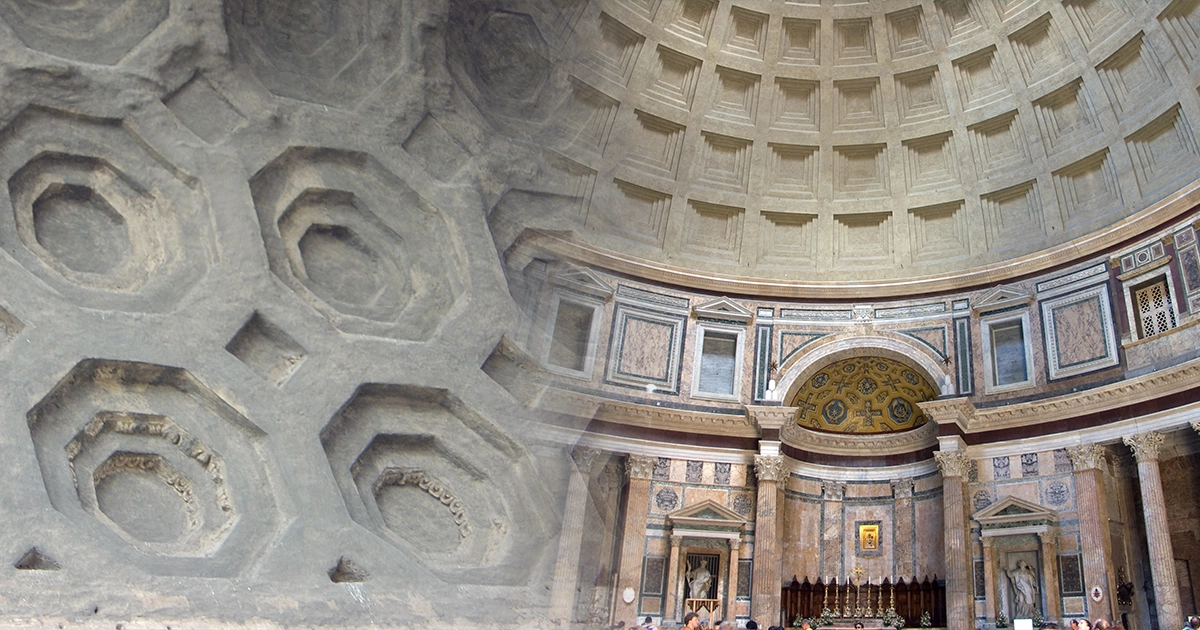
In January 2023, Admir Masic, professor of civil and environmental engineering at the Massachusetts Institute of Technology, published results that reframed nearly two millennia of assumptions about Roman concrete. Working with an MIT team on drill cores from ancient harbour walls and mortar samples from Pompeii, Masic and his colleagues confirmed that Roman builders deliberately mixed dry quicklime directly with volcanic ash before adding water, a technique called hot mixing, which produced small calcium-rich white chunks embedded throughout the hardened matrix. Those chunks, long dismissed as evidence of sloppy workmanship, turned out to be the secret to Roman concrete’s extraordinary longevity. They function as built-in repair depots, releasing calcium when cracks form and allowing the material to heal itself spontaneously. The finding, published in Science Advances, repositioned Roman concrete from a historical curiosity to an active model for low-carbon, long-lasting construction. This article explains what Roman engineers actually did, why it worked at a chemical level, and why engineers in 2025 are trying to replicate it.
What Roman Concrete Actually Was
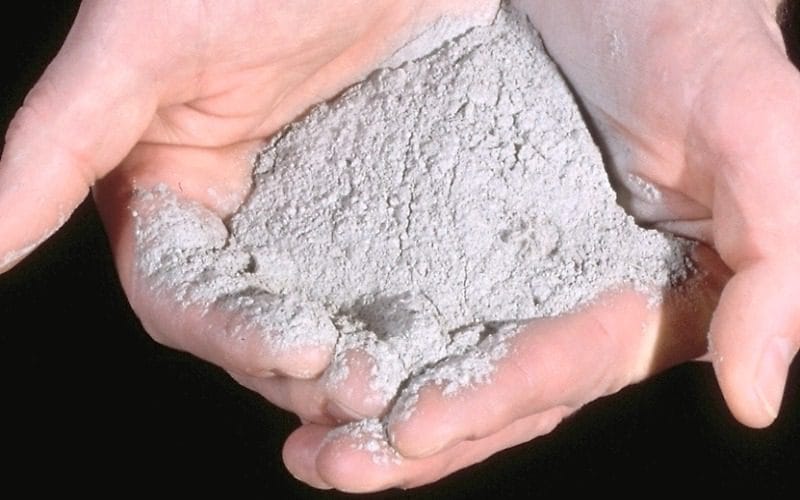
The Romans called their concrete opus caementicium, a term that covered a range of mortared rubble construction rather than a single standardised recipe. The binding agent was not Portland cement, which did not exist until 1824. Instead, Roman builders calcined limestone at relatively low temperatures to produce quicklime (calcium oxide), then mixed it with pulvis Puteolanus, volcanic ash sourced primarily from the Campi Flegrei volcanic district near Pozzuoli, on the Bay of Naples. The resulting mixture reacted with water to form calcium-aluminium-silicate-hydrate gels, known in modern cement chemistry as C-A-S-H, which are the glue that holds the material together.
The critical ingredient was the ash itself. Rich in reactive silica and aluminium, Campi Flegrei ash reacted with the free lime in the mixture to form binding gels that grew progressively stronger over time rather than weakening. Vitruvius, the architect and engineer writing in the first century BCE under Augustus, described the ash’s properties in his De Architectura, noting that structures built with it in seawater became harder the longer they stood. Pliny the Elder, writing around 79 CE in his Naturalis Historia, said the same. Both writers specified that the limestone used for the lime must be pure white and free of impurities. These were not vague instructions: they were quality controls for a material the Romans understood produced better results when mixed correctly.
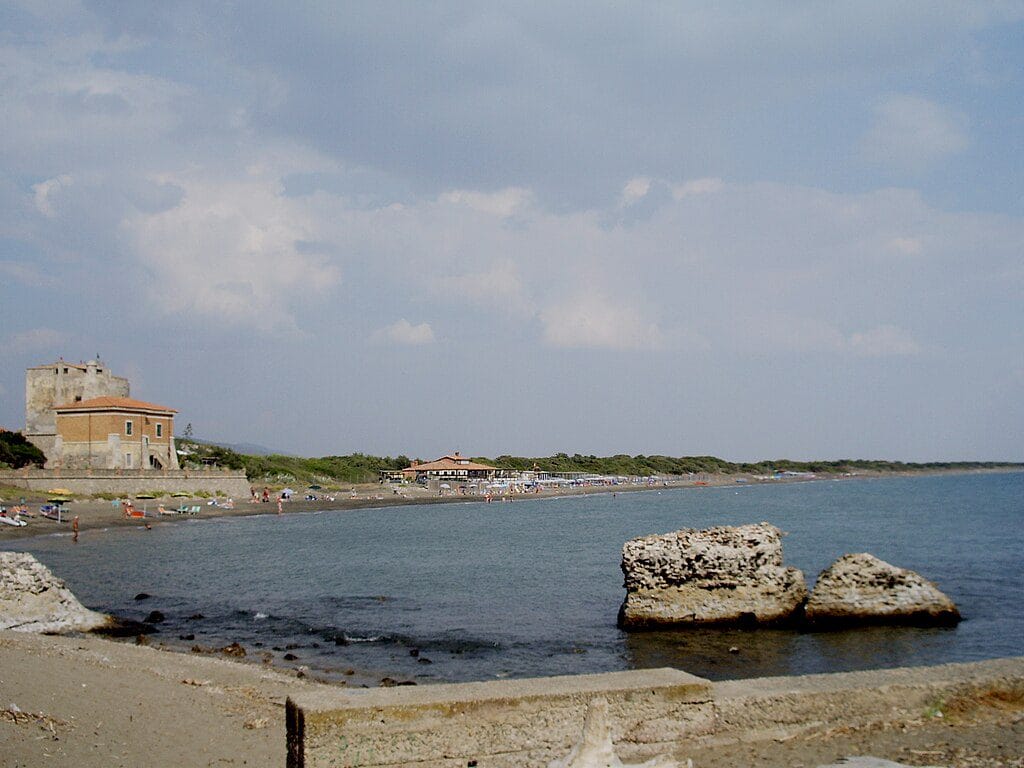
The ash was so prized that Roman engineers shipped it across the empire as ballast in grain ships. John Oleson, professor of classical archaeology at the University of Victoria, led the ROMACONS (Roman Maritime Concrete Study) project, which drilled core samples from ancient harbour structures at sites including Portus Cosanus in Tuscany and Caesarea Maritima in Israel. His team found that Campi Flegrei ash appeared consistently across harbours hundreds of miles from Naples, confirming a coordinated supply chain for the material that Vitruvius called the most important ingredient in marine construction.
The Hot Mixing Discovery and Its Implications
For decades, the accepted explanation for Roman concrete’s resilience focused entirely on the pozzolanic ash. The lime clasts scattered throughout ancient samples were seen as manufacturing defects, evidence that the quicklime had not been fully slaked before use. Masic’s 2023 paper, co-authored with Linda Seymour, Janille Maragh, and colleagues from Harvard and institutions in Italy and Switzerland, overturned that reading entirely. Using scanning electron microscopy, energy-dispersive X-ray spectroscopy, and confocal Raman imaging on mortar samples including material from the Tomb of Caecilia Metella in Rome, the team showed that the lime clasts were not accidental. They were the direct product of hot mixing, in which quicklime was combined with dry volcanic ash before water was added.
The hot mixing process is highly exothermic, generating intense localised heat that drives chemical reactions impossible at the temperatures used in modern cement production. This heat created high-surface-area lime fragments with a characteristically brittle nanoparticulate architecture, and it allowed the formation of cementing phases that cold-mixing cannot produce. When cracks later formed in the hardened matrix, they preferentially travelled through these lime clasts rather than around them. Water entering the crack contacted the reactive calcium, which recrystallised as calcium carbonate, sealing the gap within days. In laboratory tests replicating the Roman method, Masic’s team cracked samples of hot-mixed mortar and placed them in water; the cracks filled completely within two to three weeks. Samples made without hot mixing never healed at all.
A complementary 2025 study published in Nature Communications, drawing on excavations at Pompeii’s Regio IX conducted under a permit agreement between MIT and the Parco Archeologico di Pompei, confirmed the hot-mixing process directly from an intact construction site frozen in time by the 79 CE eruption of Vesuvius. Microstructural analysis of mortar collected from walls still under construction at the time of the eruption showed that quicklime and dry pozzolan were pre-mixed before water was introduced, exactly as Masic’s earlier work predicted.
What Seawater Does to Roman Concrete
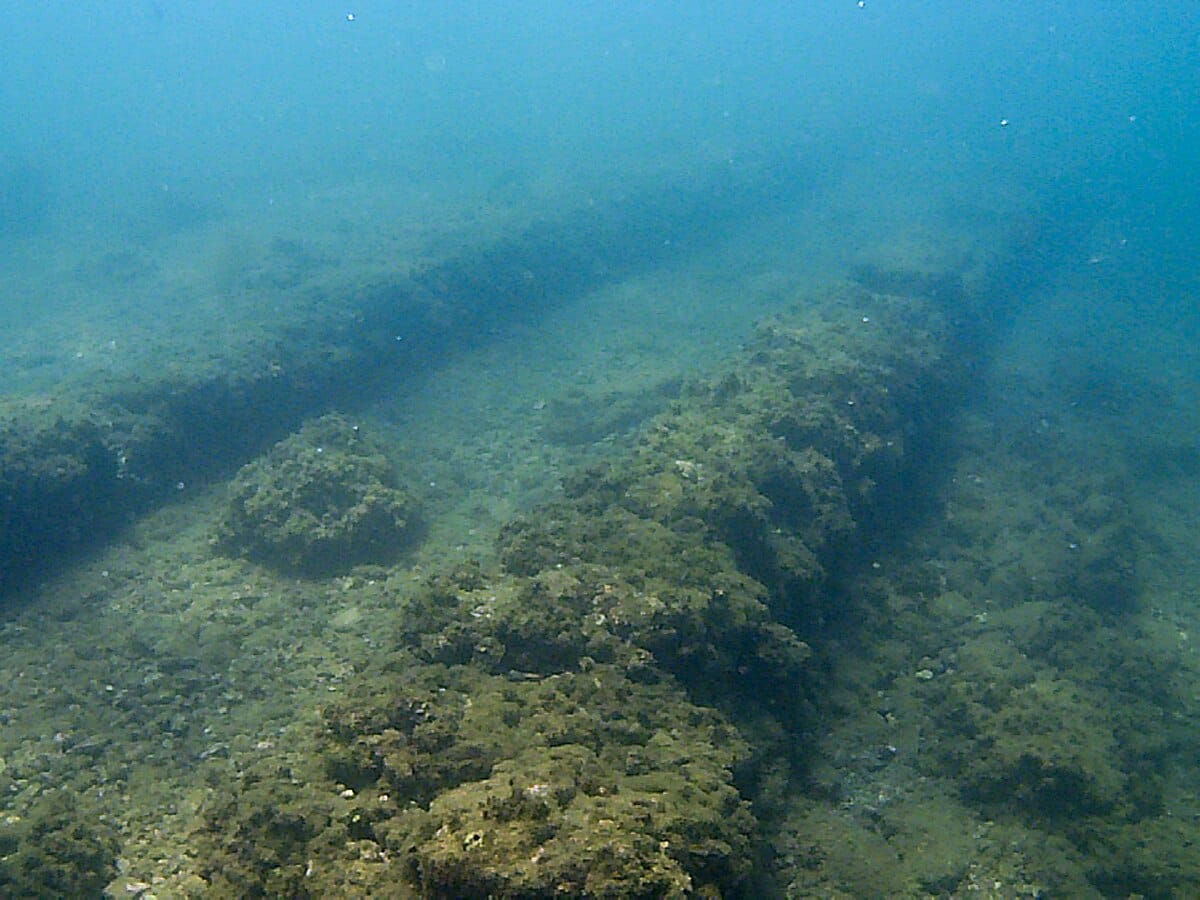
Marine Roman concrete presents a puzzle that took geologist Marie Jackson, then at the University of Utah, over a decade to unravel. Modern marine concrete degrades rapidly in seawater because chloride ions penetrate the matrix, corroding steel reinforcement and causing expansive cracking from the inside. Roman harbour concrete, which contained no steel, behaved in exactly the opposite way: the older it got, the more cohesive it became. Jackson’s team, working with ROMACONS drill cores from Baianus Sinus and Portus Cosanus using X-ray microdiffraction at Lawrence Berkeley National Laboratory’s Advanced Light Source, found the reason in two rare minerals growing inside the matrix.
The first mineral was aluminous tobermorite, known as Al-tobermorite, a layered calcium-silicate-hydrate that normally requires high-temperature synthesis to form in a laboratory. Jackson’s 2017 paper in American Mineralogist, co-authored with Sean Mulcahy and colleagues, showed that Al-tobermorite had formed at ambient seawater temperatures over centuries as seawater percolated through the concrete’s pores, dissolving components of the volcanic ash and allowing new crystals to grow. Those crystals have a platy, reinforcing shape that increases the matrix’s resistance to brittle fracture. The second mineral, phillipsite, a zeolite, formed through similar post-pozzolanic reactions and further refined the pore structure, reducing permeability.
In practical terms, this means Roman harbour concrete was not merely resistant to seawater: it was actively improved by it. The chemical exchange between the volcanic ash components and the seawater ions, including sodium, chlorine, and potassium, sustained ongoing mineralisation for two thousand years. Jackson described the material as a rock-like concrete that thrives in open chemical exchange with seawater, a property that is the structural opposite of modern Portland cement paste, which deteriorates under the same conditions. This is why Roman piers at sites like Portus Cosanus, Baianus Sinus, and Caesarea Maritima remain coherent today while modern concrete seawalls commonly require replacement within fifty years.
Built out of a love for history, kept free from distractions.
Spoken Past is an independent project shaped by curiosity, care, and long hours of research. Reader support helps keep it maintained, carefully researched, and open to everyone.
The Pantheon and Land Structures: A Different Formula
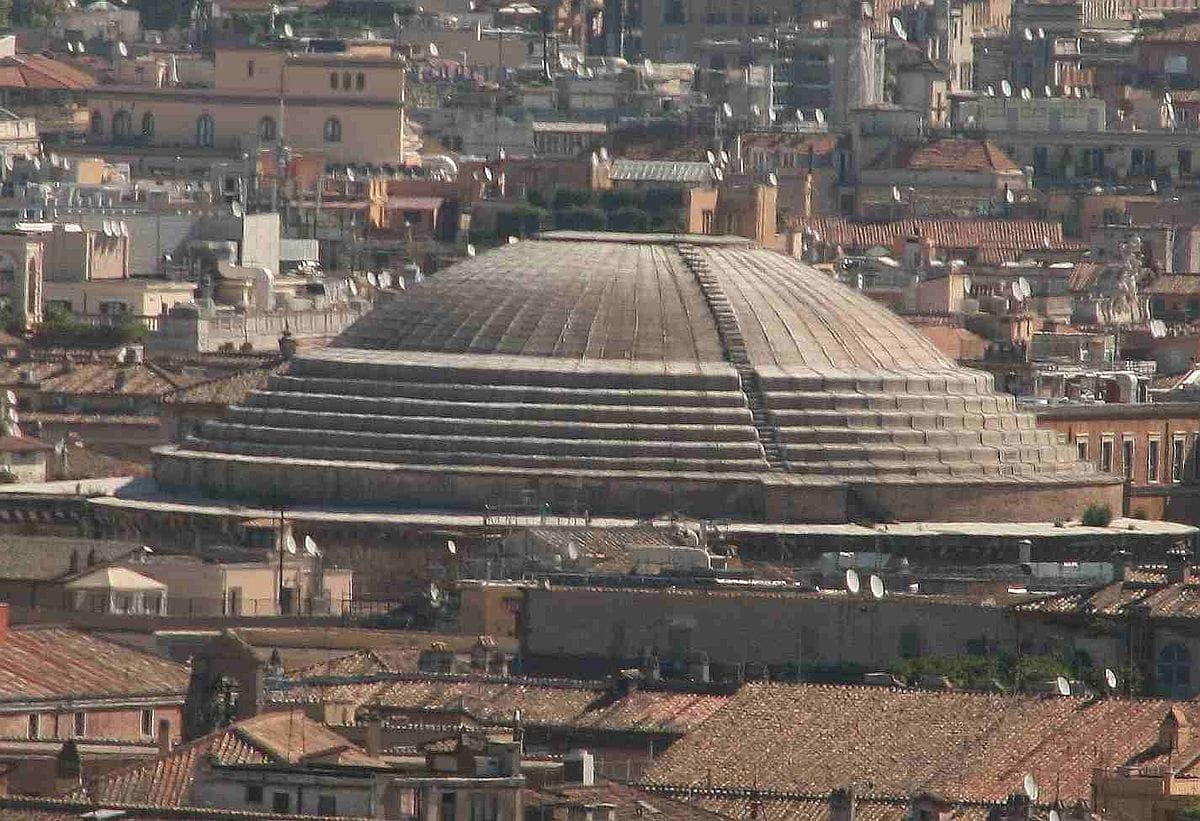
Marine Roman concrete was optimised for seawater immersion, but Roman builders on land used a sophisticated variation on the same principles. The Pantheon, dedicated in approximately 125 CE under Hadrian, contains the world’s largest unreinforced concrete dome, with a diameter of 43.3 metres, and it has not required structural intervention in nineteen centuries. The dome’s concrete was not uniform: Roman engineers used progressively lighter aggregates at higher elevations, shifting from heavy travertine limestone at the base to lighter volcanic tufa and finally to pumice near the oculus, reducing the load-borne by the structure precisely where it mattered most. The binding mortar throughout used pozzolanic ash with lime.
The Pantheon’s survival is also partly explained by the same self-healing mechanism Masic identified. The lime clasts embedded throughout the matrix would have repaired microcracking caused by thermal expansion and contraction across nineteen centuries of Roman and Italian climate. No modern unreinforced concrete dome of comparable size has been attempted, not because modern engineers lack the mathematics, but because modern concrete, without the hot-mixed lime clasts, cannot repair itself. The Pantheon demonstrates what happens when a material is designed for longevity rather than fast early strength.
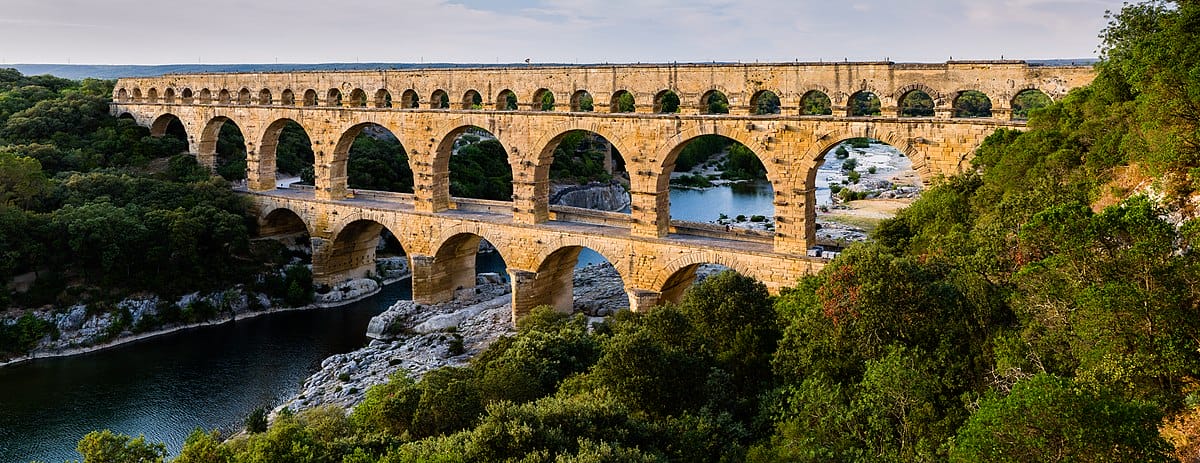
Other land structures tell the same story. Roman aqueducts, thermae, and harbour warehouses across the empire used locally adapted pozzolanic mixtures. Where Campi Flegrei ash was unavailable, engineers substituted other reactive volcanic materials or ceramic fragments, a practice Vitruvius describes in De Architectura Book II. The core principle remained constant: lime reacting with a reactive silica-alumina source produces binding gels that grow stronger over decades, not weaker.
Carbon, Clinker, and Why Roman Concrete Matters Now
Portland cement production accounts for roughly eight percent of global CO₂ emissions, making it one of the largest single sources of industrial carbon dioxide on the planet. Two separate processes drive that figure. First, limestone calcination: when calcium carbonate (limestone) is heated to around 1,450°C to produce clinker, it releases CO₂ chemically, a process that cannot be eliminated by switching to renewable energy because the emissions come from the rock itself, not the fuel. Second, the fuel burned to reach those temperatures adds additional emissions. Roman builders, by contrast, calcined limestone at far lower temperatures, under 900°C in most estimates, and replaced a substantial fraction of the binding material with volcanic ash that required no high-temperature processing at all.
The modern relevance is direct. Paulo Monteiro, professor of civil and environmental engineering at the University of California, Berkeley, and a co-investigator on the Roman concrete research, estimated that replacing forty percent of global Portland cement demand with pozzolanic materials would produce a significant reduction in process emissions, and that pozzolan deposits exist in sufficient quantity across the Middle East, Latin America, Africa, and parts of Asia to make this feasible. Calcined clays, which can substitute for natural volcanic ash where the latter is unavailable, undergo calcination at around 750°C rather than 1,450°C, cutting kiln energy requirements sharply.
The durability argument compounds the carbon benefit. A harbour quay built with a Roman-style pozzolanic binder that lasts one hundred and twenty years rather than fifty avoids one complete rebuild cycle, eliminating the associated manufacturing emissions, transport, demolition, and logistical disruption entirely. Masic and several of his colleagues from the 2023 study founded a company called DMAT, based in Udine, Italy, to pursue commercial production of hot-mixed Roman-inspired concrete. They are not alone: a growing number of concrete manufacturers in Europe and North America are testing high-volume pozzolan replacements informed by the same research.
What Modern Engineers Are Actually Borrowing
Translating Roman construction knowledge into twenty-first-century practice is not a matter of copying a single recipe. The volcanic ash from Campi Flegrei that made Roman marine concrete work so well is not available in unlimited quantities, and it is not evenly distributed across the globe. What the Roman research has clarified is a set of principles that can be applied with locally available materials. Calcined clays, natural zeolites, volcanic tuffs, and silica-rich industrial by-products can all serve the role that Campi Flegrei ash played in the original: they supply reactive alumina and silica that transform free lime into binding gels over time, refine pore structure, and reduce permeability without requiring high-kiln temperatures.
The hot-mixing process itself is being actively reconsidered. Modern cement production uses pre-slaked lime, meaning quicklime is hydrated before use, which is safer and easier to control but eliminates the formation of the reactive lime clasts that give Roman concrete its self-healing capacity. Masic’s laboratory tests demonstrated that hot-mixed modern mortars incorporating volcanic ash or calcined clay can replicate the crack-healing behaviour, sealing fractures through spontaneous calcium carbonate precipitation within weeks. Introducing this into commercial production requires adjustments to mixing protocols, not fundamentally different raw materials.
Standards bodies are moving in the same direction, though slowly. Performance-based durability specifications, which measure chloride diffusion, permeability, and sulphate resistance directly rather than prescribing cement composition, make it easier for engineers to substitute pozzolanic binders without violating building codes written around Portland cement. The European standard EN 197-1 already recognises blended cements containing natural pozzolans and calcined clays. Equivalent standards in the United States, Australia, and parts of the Middle East are being revised. Each revision that shifts from prescriptive to performance-based specification widens the door for Roman-inspired mixes.
What the Research Still Cannot Tell Us
The scholarship on Roman concrete has advanced rapidly since 2013, but significant gaps remain. The ROMACONS project sampled harbour concrete from a geographically and chronologically limited set of sites, mostly Italian and Israeli ports from roughly 55 BCE to 115 CE. Whether the same mineralogical processes occur in Roman concrete from other regions, such as the eastern Mediterranean provinces where local volcanic geology differs substantially, remains incompletely studied. The 2025 Pompeii excavation work is beginning to address land-based construction more systematically, but published data are still sparse.
There is also an unresolved question about the long-term behaviour of modern materials designed to replicate Roman properties. Roman concrete had two thousand years to demonstrate its durability. A hot-mixed calcined-clay mortar tested in a laboratory over five years, or even fifty, cannot fully reproduce that evidence base. The field is genuinely uncertain about whether modern pozzolanic mixes will achieve comparable longevity, or whether the specific combination of Campi Flegrei geochemistry, Roman seawater, and two millennia of slow mineralisation produced properties that cannot be wholly engineered into modern production conditions.
What is not in dispute is that the research has substantially changed how materials scientists and civil engineers think about cement chemistry. The assumption that modern Portland cement represents an improvement over all preceding binders has been quietly abandoned in specialist circles. Roman concrete did not need steel reinforcement to span thirty metres. It did not need synthetic admixtures to resist sulphate attack. It did not need replacement after fifty years in the sea. Understanding why it worked is one of the more practically consequential developments in materials science in the last decade, and it started with someone asking why white chunks kept appearing in ancient mortar.
Sources: Seymour, L.M., Maragh, J., Sabatini, P. et al., “Hot mixing: Mechanistic insights into the durability of ancient Roman concrete,” Science Advances, 9(1), 2023, DOI: 10.1126/sciadv.add1602; Jackson, M.D., Mulcahy, S.R., Chen, H. et al., “Phillipsite and Al-tobermorite mineral cements produced through low-temperature water-rock reactions in Roman marine concrete,” American Mineralogist, 102(7), 2017, DOI: 10.2138/am-2017-5993CCBY; MIT News Office, “Riddle solved: Why was Roman concrete so durable?”, news.mit.edu, January 6, 2023; Vitruvius, De Architectura, Book II, trans. Frank Granger, Harvard University Press (Loeb Classical Library), 1931; Pliny the Elder, Naturalis Historia, Book XXXVI; Oleson, J.P. et al., “Reproducing a Roman maritime structure with Vitruvian pozzolanic concrete,” Journal of Roman Archaeology, 19, 2006, pp. 29–52; Lawrence Berkeley National Laboratory, “Roman seawater concrete holds the secret to cutting carbon emissions,” newscenter.lbl.gov, July 3, 2017.