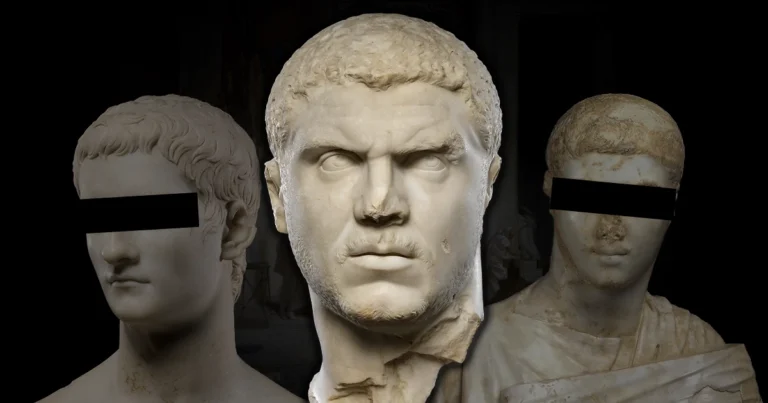

In AD 212, Emperor Caracalla signed a document known as the Constitutio Antoniniana, granting Roman citizenship to nearly every free person living within the borders of his empire. At that moment, fishermen in Alexandria, farmers in Britannia, and merchants in Antioch all became citizens of the same political community. That single act encapsulates something essential about how the Roman Empire worked: it absorbed people rather than simply ruling over them. The question of why the Roman Empire lasted as long as it did has no single answer, but it does have several interlocking ones. This article examines the military, infrastructural, legal, economic, and political mechanisms that allowed one city-state on the Tiber River to hold together a territory stretching from Scotland to Mesopotamia for more than a thousand years.
The Army That Built Itself a New Recruitment Model
The earliest Roman army was a citizen militia. Landowners who could afford their own equipment marched out in the spring, fought a campaign, and returned to their farms before the harvest. The system worked tolerably well for a city defending its immediate territory, but two centuries of conquest strained it badly. Small farmers who served long overseas campaigns came home to find their land absorbed by wealthy landowners who had purchased it cheaply during their absence. By the second century BC, the pool of property-owning men eligible to serve was shrinking at exactly the moment when Roman commitments in Spain, North Africa, and the Greek east demanded more soldiers, not fewer.
Gaius Marius, serving his first consulship in 107 BC during the war against the Numidian king Jugurtha, responded by opening enlistment to the capite censi, literally “those counted by head” rather than by property. Modern scholars debate precisely how revolutionary this step was: Paul Erdkamp of Vrije Universiteit Brussel and others have argued that property qualifications had already been eroded by decades of necessity, and that Marius was formalising a gradual drift rather than inventing a new system outright. What is less disputed is the result. The state, rather than each recruit, now supplied weapons, armour, and rations. Soldiers carried their own packs weighing roughly 40 kilograms on the march, earning them the nickname Muli Mariani, “Marius’s Mules.” Retired veterans expected plots of land from their commander, not from the Senate, which created a personal bond between legionaries and their generals that would eventually destabilise the Republic. But it also produced an army of full-time professionals who drilled, built fortifications, and could siege a city or cross a flooded river with equal competence.
The manipular legion of earlier centuries had arranged infantry in three lines of heavy spearmen supported by light skirmishers, all operating in relatively open formation. After a disastrous series of battles in Spain and against the Cimbri and Teutones in northern Gaul during the late second century BC, the cohort gradually replaced the maniple as the basic tactical unit. Each cohort of roughly 480 men could operate independently, hold a section of difficult terrain, or feed into gaps in the line without the rigid alignment the old system required. This tactical flexibility, combined with the standardisation of equipment that accompanied professional enlistment, produced a force that opponents from Gaul to Judea consistently found difficult to defeat in pitched battle.
Roads, Bridges, and the Logistics of an Empire
A professional army could only operate across vast distances if it could move reliably. Roman roads solved that problem by a method that was as much political as it was engineering. Surveyors using the groma, a simple cross-shaped instrument that established right angles, drove their lines across Italy, Gaul, Britain, and the Levant with a directness that still surprises travellers who follow their routes today. Where terrain forced a deviation, a new straight line began from the point of deflection. The resulting network was not perfectly straight in an absolute sense, but each individual segment was, which maximised marching efficiency while minimising the total calculation required in the field.
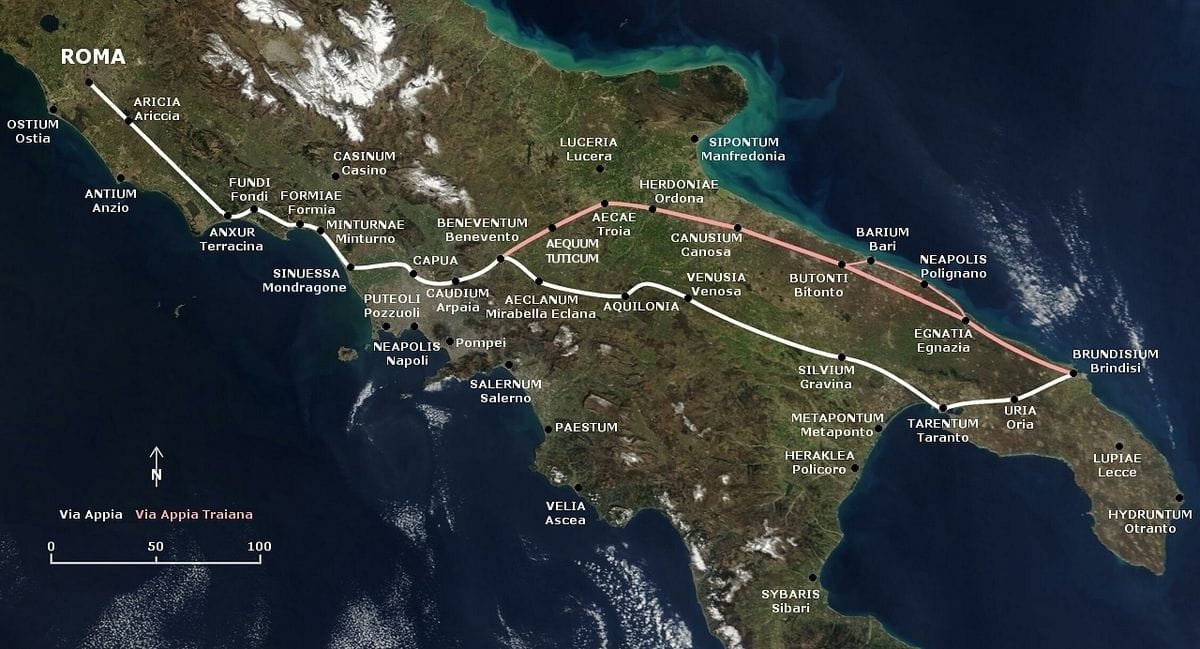
The road surface itself was built in layers. Foundation courses of large flat stones rested on packed rubble, topped with a cambered wearing surface that shed rainwater into drainage ditches cut along either side. Roman engineers used volcanic pozzolana, a naturally occurring ash mined near Pozzuoli on the Bay of Naples, to produce a cement that hardened even underwater. The Pons Fabricius in Rome, completed in 62 BC, used this material and still carries pedestrian traffic today. Bridges of this quality allowed an army marching from Rome to Brundisium, modern Brindisi, to cover the journey in under ten days along the Via Appia, opened in 312 BC. The same road that supplied an army returning from Greece could carry a merchant’s wagon heading south or a courier bearing dispatches from the emperor in the opposite direction. By late antiquity, the imperial road registry listed roughly 400,000 kilometres of maintained surface, enough to circle the Earth ten times.
Bridges demanded particular engineering skill. Trajan’s bridge across the Danube, completed around AD 105 by the architect Apollodorus of Damascus, used twenty stone piers to support a timber superstructure spanning approximately 1,135 metres. The construction required diverting sections of the river, sinking coffer dams, and cutting shaped stone at a scale that modern engineers still regard with respect. Even after Hadrian deliberately demolished the superstructure to prevent barbarian use of the crossing, the stone piers remained visible for centuries, a monument to the logistical ambition that built them.
Water and the Urban Population It Sustained
Moving troops was only one logistical challenge. Feeding and supplying a city that reached one million inhabitants under Augustus required a water system of comparable scale. Rome’s aqueducts solved this by exploiting the principle of gravity over long distances with extraordinary precision. The water commissioner Sextus Julius Frontinus, writing his administrative report De Aquaeductu around AD 97, described nine aqueducts then serving the city, each drawing from different springs to deliver water of varying quality for different uses. Spring water from the Anio valley fed the Aqua Marcia, considered the purest, and was reserved for drinking fountains. Water from the Anio Novus, which drew directly from the river, was murkier and directed toward garden irrigation and bath complexes.
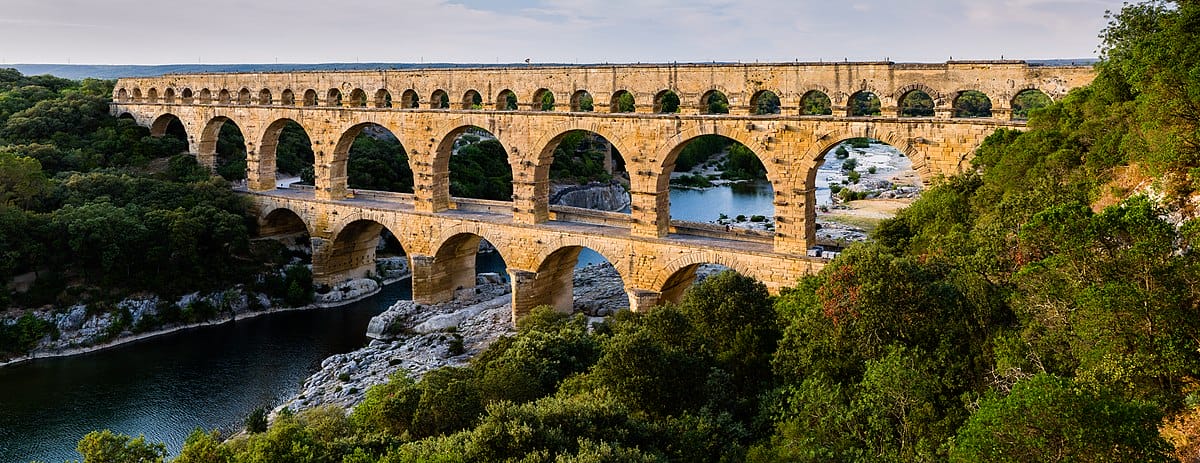
Engineers cut channels with gradients so shallow that a drop of 34 centimetres per kilometre was considered optimal, ensuring a continuous flow that resisted silting. Settling tanks at intervals along the channel allowed suspended debris to fall out before the water reached the city’s distribution points, known as castella divisoria. Lead pipes then distributed water from these tanks to public fountains, bath complexes, and private subscribers who paid for a connection. The Pont du Gard, the aqueduct bridge that carried water to the Roman city of Nemausus in southern Gaul, stands 49 metres high and its upper tier maintains a gradient so gentle that engineers needed to survey kilometres of terrain to lay it out. That bridge still stands, essentially intact, two thousand years after its construction.
The social consequences of reliable urban water supply were profound. Rome’s fourteen large bath complexes, the thermae, required enormous quantities of water to operate their heated pools, exercise yards, and steam rooms. These facilities admitted up to 6,000 bathers on a busy afternoon for a nominal fee, making them genuinely public institutions that mixed social classes in ways that few other urban spaces did. Clean water also reduced waterborne disease in a city whose population density would have otherwise made cholera and dysentery endemic. A healthier, larger urban population created the market demand that attracted merchants from every corner of the Mediterranean.
Built out of a love for history, kept free from distractions.
Spoken Past is an independent project shaped by curiosity, care, and long hours of research. Reader support helps keep it maintained, carefully researched, and open to everyone.
Law as the Architecture of Empire
Infrastructure moved people and goods; law made their transactions predictable across three continents. The Twelve Tables of 451 BC, the earliest codified Roman law, were written on bronze tablets and displayed publicly in the Forum so that ordinary citizens could read the rules that priests had previously kept to themselves. That instinct for transparency, however imperfect in practice, became a structural feature of Roman legal culture. Over the following centuries, jurists built an increasingly sophisticated body of doctrine on top of those early rules. The second-century AD jurist Gaius developed the concept of bona fides, good faith, as a standard for evaluating contracts, and articulated the distinction between ius civile (law applicable to Roman citizens) and ius gentium (law applicable to dealings between Romans and foreigners).
Provincial governors received standardised edicts specifying permissible tax rates, court fees, and the procedures for appeals. A merchant from Massilia conducting business with a partner in Antioch could expect their dispute to be adjudicated under recognisable procedural rules regardless of which province the case was heard in. This legal predictability lowered the cost of long-distance trade in the same way that common weights and measures do: it removed a layer of uncertainty that would otherwise have made every transaction a negotiation about rules as well as about goods.
The Justinianic Corpus Juris Civilis, compiled between AD 529 and 534, collected and edited centuries of accumulated opinion into a body of law that subsequently influenced Byzantine, Islamic, and eventually Napoleonic legislation. The French Civil Code of 1804 borrowed structural concepts directly from Roman jurisprudence. Modern legal systems from Quebec to São Paulo operate within frameworks that trace their conceptual ancestry to jurists working under the Roman Empire. That intellectual reach across fifteen centuries is itself a measure of how durably the law served as the skeleton of imperial organisation.
Citizenship, Grain, and the Politics of Inclusion
The Roman Empire was unusual among ancient empires in its willingness to extend membership rather than simply extract tribute. After the Social War of 91-87 BC, Rome granted full citizenship to the Italian communities that had fought for it, incorporating millions of former allies as full participants in Roman political life. Emperor Claudius, speaking to the Senate around AD 48 according to the surviving bronze tablet from Lyon, argued that Rome’s greatness had always depended on absorbing talented newcomers, pointing to the example of his own ancestors who had once been Etruscan outsiders. In AD 212, Caracalla’s Constitutio Antoniniana extended citizenship to virtually all free inhabitants of the empire. Scholars including Lukas de Blois of Radboud University Nijmegen have argued that the primary motive was fiscal, since citizens paid the inheritance tax that non-citizens did not. The result, whatever the motivation, was that a shepherd in Thrace and a senator in Rome shared a legal identity that gave the former a stake in the empire’s continuity.
Feeding the urban population was the other side of social management. Rome required approximately 200,000 tonnes of grain annually, the bulk of it imported from Egypt and North Africa by ship owners known as navicularii. The state bound these contractors to regular delivery schedules through a system of tax exemptions, grants of equestrian status markers such as the right to wear a gold ring, and priority use of the harbour facilities at Portus, the artificial deep-water port built by Claudius and expanded by Trajan at the mouth of the Tiber. At Portus, two large hexagonal basins could accommodate up to 200 vessels simultaneously. Cargo transferred to river barges that carried it upstream through a customs gate and into the massive warehouses of the Horrea Galbae, where it was stored until distribution. Weekly grain rations, later converted to baked loaves, reached roughly 320,000 adult male citizens. This system of subsidised food, the annona, was expensive to maintain. It was also politically indispensable.
Colonies, Currency, and Cultural Adaptation
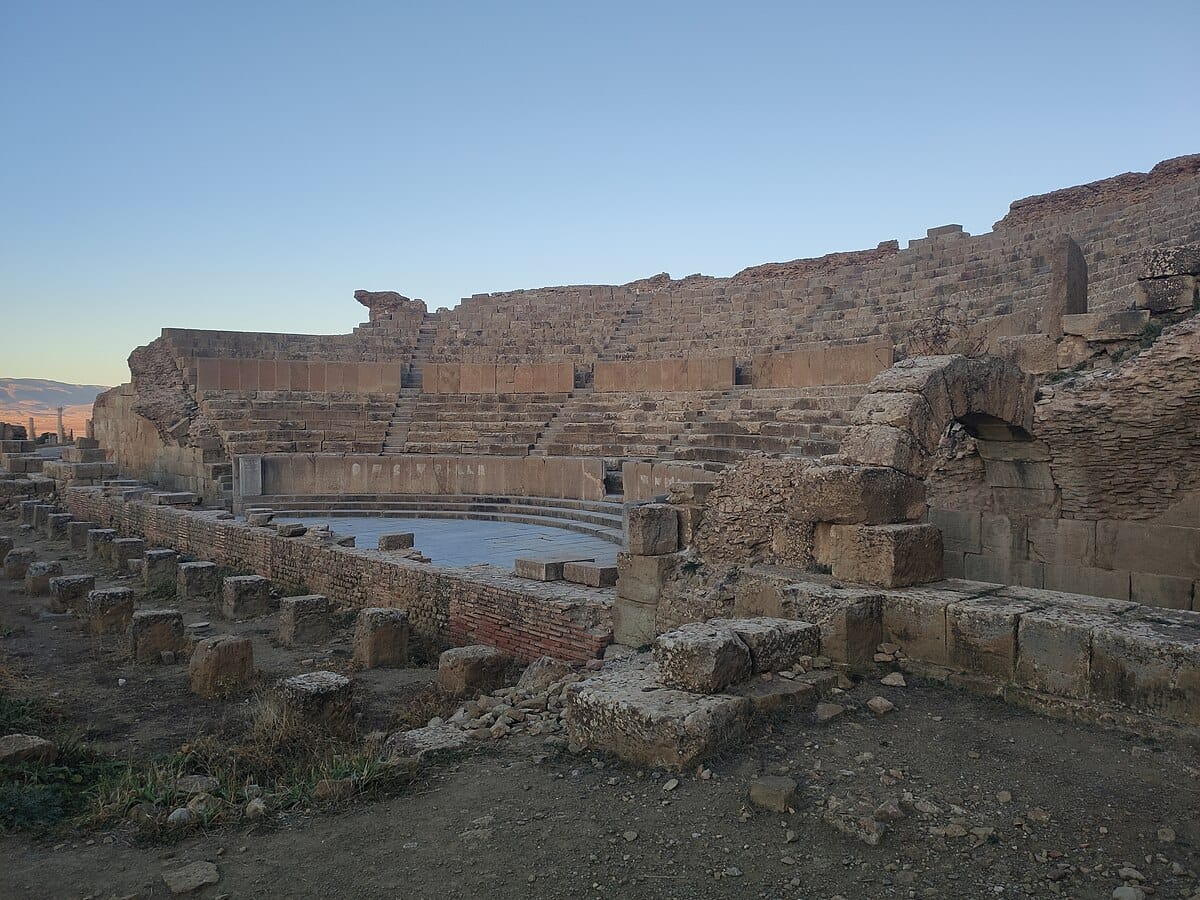
Trajan founded Timgad in North Africa in AD 100 by the standard method: a surveyor laid out two perpendicular streets, the cardo and the decumanus, and a grid of insulae followed. Forum, basilica, and Capitolium occupied the intersection, placing civic and religious life at the literal and symbolic centre. Theatre seating arranged spectators by rank, with wide marble steps for decurions, the local ruling council, and narrower wooden benches for freedmen. Even a resident who had never visited Rome could learn what Roman hierarchy looked like by sitting in the theatre at Timgad. Archaeologists have mapped over forty amphitheatres outside Italy, and evidence of similar forum-basilica complexes runs from York to Jerash in modern Jordan.
Monetary uniformity reinforced these physical and cultural networks. The silver denarius introduced in 211 BC weighed 4.5 grams when first minted and served as the standard coin of the empire for four centuries. Its reliability allowed merchants in Lusitania and bankers in Antioch to quote prices in the same unit without the friction of currency conversion. Periodic debasements, most severely under Gallienus in the AD 260s when the silver content fell below five percent, triggered inflation that disrupted markets and eroded trust. Diocletian’s Edict on Maximum Prices in AD 301 attempted to fix wages and commodity prices across the entire empire, an intervention that Diocletian’s own administrators found nearly impossible to enforce. Constantine’s gold solidus, introduced around AD 309, restored stability that lasted, remarkably, until the eleventh century in the eastern empire.
Cultural flexibility complemented economic uniformity. Rather than suppressing local religions, emperors generally demanded loyalty to the imperial cult, the ritual acknowledgement of Roman sovereignty, and left local practices alone. Syrian merchants brought Mithras to the Rhine frontier, where legionary chapels dedicated to the god have been found as far north as Hadrian’s Wall. Egyptian Isis acquired temples in Rome itself. Latin spread as the language of law and administration, but Greek retained prestige in medicine, philosophy, and eastern commerce. Bilingual inscriptions in cities like Lepcis Magna in North Africa offered the same text in Latin and Neo-Punic, ensuring comprehension across language communities without requiring speakers to abandon their native tongue.
The Frontiers and the Long Eastern Thread
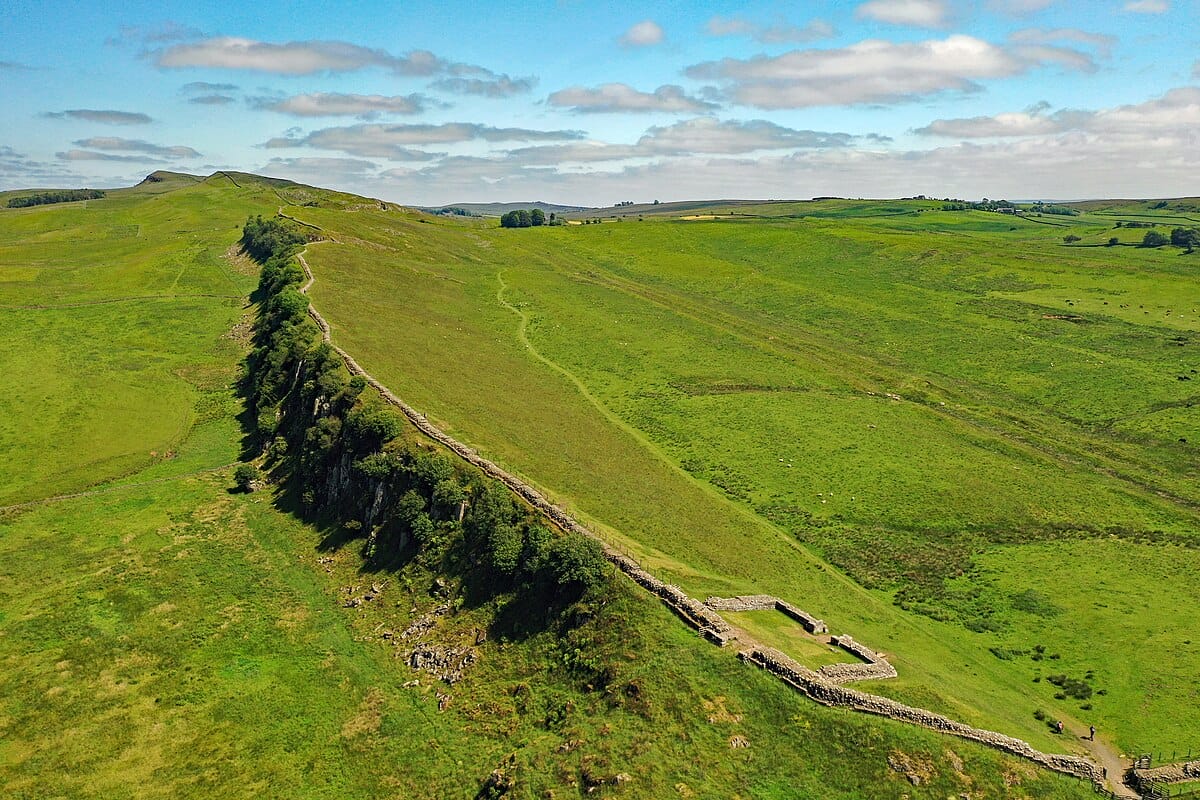
Rome’s defensive system worked on depth rather than on a single wall. Along the Rhine and Danube, a forward belt of auxiliary forts, manned by non-citizen soldiers recruited locally, screened patrol zones and detected incursions before they reached interior territory. Behind them lay garrison towns whose taverns, markets, and workshops created economic ties between soldiers and civilians that made desertion less attractive and local intelligence-gathering easier. A third layer consisted of client kingdoms, such as the Nabataean realm before its formal annexation in AD 106, subsidised to absorb the initial pressure of raids from further afield. Hadrian’s Wall, completed around AD 128 and stretching 118 kilometres across northern Britain, represents one regional variation on this model. Milecastles at roughly 1,500-metre intervals controlled civilian movement through gateways while denying uncontrolled passage to raiders. The wall taxed and counted travellers; it did not simply exclude them.
The third-century crisis, roughly AD 235 to 284, subjected this layered system to its hardest test. Breakaway states emerged in Gaul and Palmyra. Plague reduced provincial populations in ways that are still being quantified by archaeologists examining skeletal samples. Coinage debasement drove inflation to levels that disrupted the military payroll and tax system simultaneously. Yet Aurelian marched his army across the entire empire between AD 270 and 275, defeating Palmyra in the east and the Gallic Empire in the west, and encircled Rome itself with the massive Aurelian Walls, 19 kilometres of concrete and brick that can still be walked today. Diocletian followed with the tetrarchy, dividing supreme authority among four co-emperors to reduce the risk of civil war by ensuring that no single general could claim the whole prize. Constantine’s founding of Constantinople in AD 330 positioned the empire’s administrative centre closer to the wealthier eastern provinces and the Danube frontier simultaneously.
When the chieftain Odoacer deposed the last western emperor, Romulus Augustulus, in AD 476, provincial administrators in Alexandria and Antioch continued to date their official documents by the reigning emperor in Constantinople. Justinian’s legal commission compiled the Corpus Juris Civilis between AD 529 and 534, producing the text that still underpins civil law traditions from France to Argentina. Byzantine gold solidi carried the Latin abbreviation CONOB, indicating the Constantinople mint’s gold standard, until the eleventh century. The eastern half of the Roman Empire finally fell to the Ottoman Turks in 1453, roughly 1,700 years after the Servian Wall first enclosed the city on the Tiber. No other polity in Western history maintained recognisable institutional continuity across a comparable span of time.
Primary sources consulted: Sextus Julius Frontinus, De Aquaeductu Urbis Romae, trans. R. H. Rodgers (University of Vermont, 2003); Sallust, Bellum Iugurthinum 86.2, Perseus Digital Library; Pausanias, Description of Greece, Perseus Digital Library. Secondary scholarship: Paul Erdkamp, ed., A Companion to the Roman Army (Blackwell, 2007); Lukas de Blois, “The ‘Constitutio Antoniniana’ (AD 212): Taxes or Religion?” Mnemosyne 67, no. 6 (2014); Alex Imrie, The Antonine Constitution: An Edict for the Caracallan Empire (Brill, 2018); Robert H. Rodgers, ed., Frontinus: De Aquaeductu Urbis Romae, Cambridge Classical Texts and Commentaries 42 (Cambridge University Press, 2004); A. Trevor Hodge, Roman Aqueducts and Water Supply (Duckworth, 1992)