A sponge diver off Turkey’s southern coast surfaced in 1982 with a description that puzzled archaeologists: metal biscuits with ears scattered across a steep seabed. Those biscuits turned out to be copper oxhide ingots, the standard bulk commodity of the Late Bronze Age. The site, off the promontory of Uluburun near Kaş, would draw over ten seasons of excavation and more than twenty-two thousand dives. What came up changed how we understand international trade around 1320 BCE. Ten tons of copper, about one ton of tin, hundreds of glass ingots, jars of tree resin, carved ivory, gold jewelry, and everyday utensils lay where a merchant ship had pitched down a slope between roughly 44 and 61 meters deep. Across the hull and cargo, evidence points to a network that linked Cyprus, the Levant, Egypt, the Aegean, and as far as the Baltic.
Where and when did Uluburun sink, and how do we know?
The wreck lies off the eastern side of Uluburun, a headland southeast of Kaş on Turkey’s Turquoise Coast. The site is a steep, rocky slope. Divers recorded artifacts from about 44 to 52 meters depth, with a scatter down to about 61 meters, which suggests a hull that broke up as it slid. Excavation began in 1984 and continued through the early 1990s, directed by the Institute of Nautical Archaeology at Texas A&M University, with field leadership by George F. Bass and Cemal Pulak. Teams lived in a cliffside camp and aboard a research vessel. They mapped the site by triangulation, used airlifts to move sediment, and lifted the cargo item by item.
Dating converges on the later fourteenth century BCE. Tree-ring and radiocarbon work on short-lived materials from the last voyage point to around 1320 BCE, with reasonable margins. Ceramic styles fit that frame. A small gold scarab naming Nefertiti, the queen associated with Egypt’s Amarna period, gives a firm terminus; it could not predate her lifetime. The scarab by itself cannot fix the year of sinking, since heirloom pieces moved through the market, but in combination with the other datasets it sits comfortably in the final quarter of the fourteenth century BCE.
What kind of ship was it?
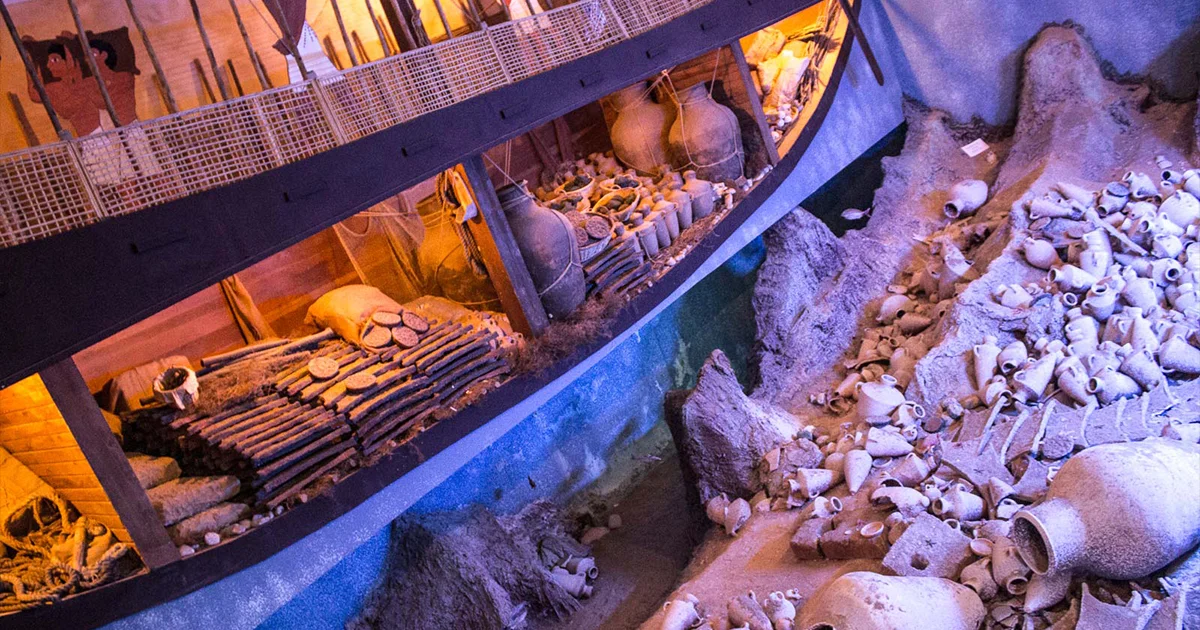
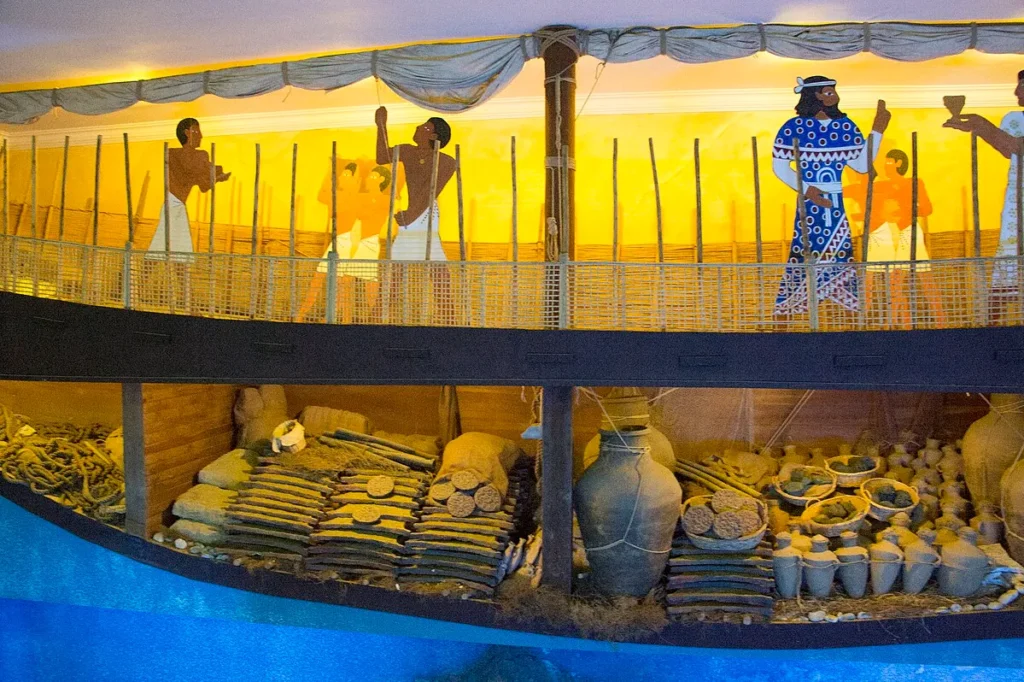
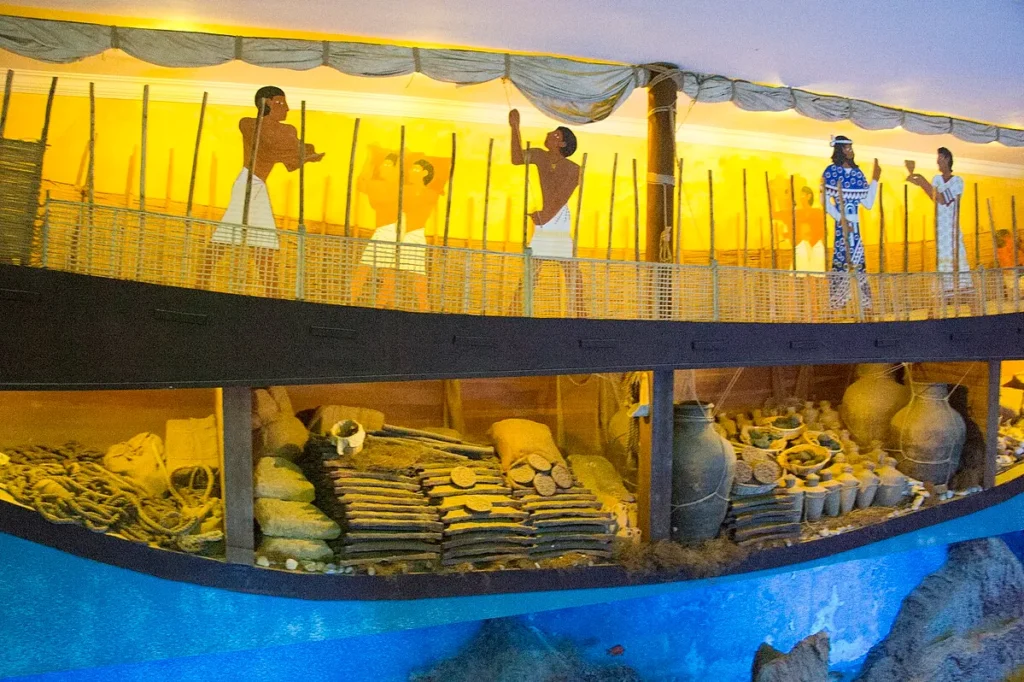
Archaeologists reconstructed a single-masted merchant vessel, about 15 to 16 meters long, built by the shell-first method typical of the eastern Mediterranean. The planks were likely cedar, joined by closely spaced mortise-and-tenon joints that locked the hull together before frames were inserted. A deep keel plank and a steering oar completed a hull optimized for coasting and open-water passages in good summer weather. The ship carried stone anchors of a Syro-Canaanite type, a form rare in the Aegean but common on Levantine coasts and Cyprus. Those anchors serve as cultural fingerprints and as practical evidence: a heavily laden merchantman could quickly drop multiple stones to hold position in gusty coastal winds.
How did the team piece the cargo together? A short methods box
Conservation and recording were as vital as the dives themselves. Each object was mapped on the seabed, measured, photographed, and then moved to tanks for desalination. Residue analysis identified tree resin in many jars as Pistacia, or terebinth, a resin used in incense, perfumes, medicine, and possibly as a wine additive. Lead-isotope analysis on copper ingots points strongly toward Cypriot sources. Tin ingots show more than one origin, with Anatolia and possibly Central Eurasia implicated, a reminder that the trade web reaching Uluburun extended beyond the Mediterranean. Petrographic, chemical, and typological studies of ceramic containers placed some jars in the northern Levant. Glass ingots, disk-shaped and colored cobalt blue or turquoise, matched recipes current in Egypt and the Levant. The combination of shipping technology, raw materials, and fine goods painted a consistent picture: a Levantine-built ship running a royal or palace-controlled route that supplied Aegean consumers.
What was in the hold, and how much of it survived?
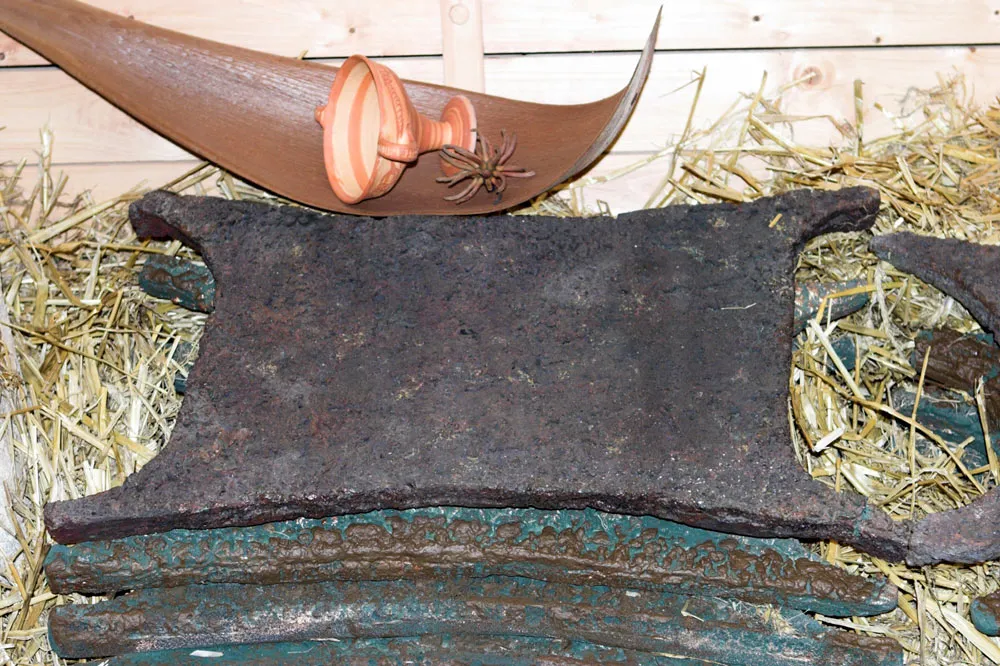
The cargo was dominated by metals. Stacked in four rows across the hold were more than three hundred oxhide copper ingots, with additional bun and oval ingots. Total copper mass approaches ten tons. Oxhide ingots, so called for their four corner protrusions, were designed for lifting, lashing, and mule transport overland once a ship reached port. Alongside sat about one ton of tin, enough to alloy roughly eleven tons of bronze at a ten-to-one ratio. A merchant ship that delivered that metal package gave palaces the means to outfit armies, arm guards, and supply workshops.
But metal was only the start. The hold carried:
-
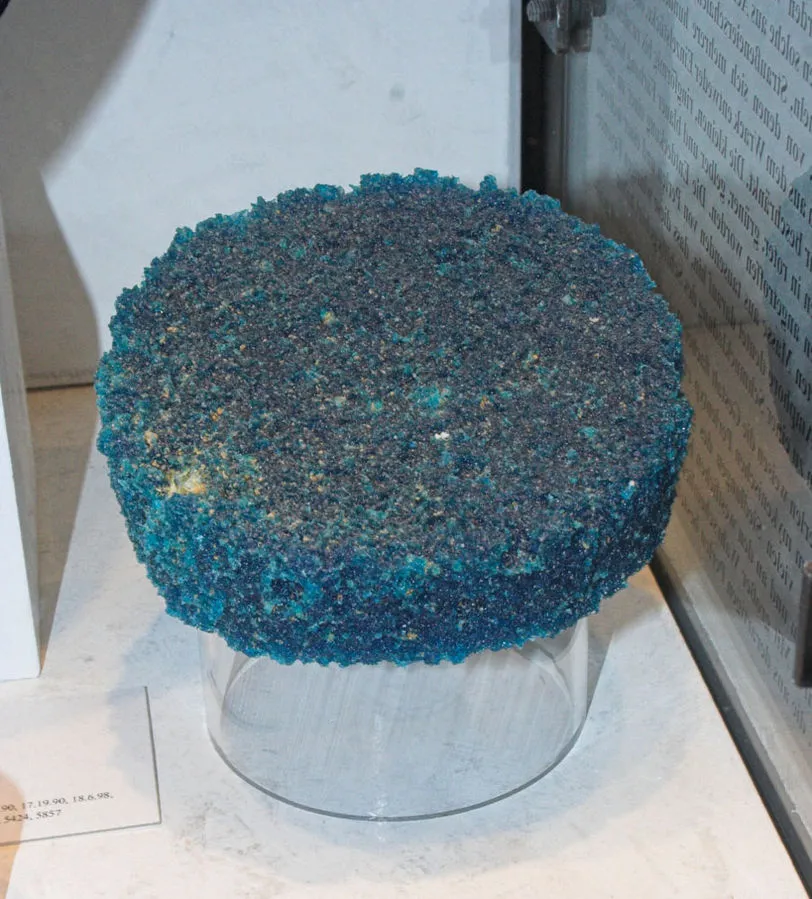
Glass ingots, discoid and standardized. Colors include cobalt blue and turquoise, both high-status hues in Late Bronze Age glasswork.
-
Canaanite jars, many of them packed with terebinth resin, plus a few filled with olives and one with glass beads.
-
Exotics and organics: elephant tusks and hippopotamus teeth, tortoiseshell, ostrich eggshells, and logs of dark tropical hardwood.
-
Luxury and diplomatic goods: gold ornaments, silver scrap, a biconical gold chalice, faience vessels, and the Nefertiti scarab.
-
Tools and weapons: drills, chisels, saws, a pair of tongs, sickles, spearheads, arrows, and swords in several regional styles.
-
Weights and measures: an extraordinary set of geometric and animal-shaped balance weights in Near Eastern standards.
-
Writing equipment: small folding writing tablets with ivory hinges, originally filled with wax, an early example of portable note-taking.
-
Foodstuffs and spices: almonds, pine nuts, figs, grapes, pomegranates, coriander, cumin, and safflower.
Why do oxhide ingots matter so much?
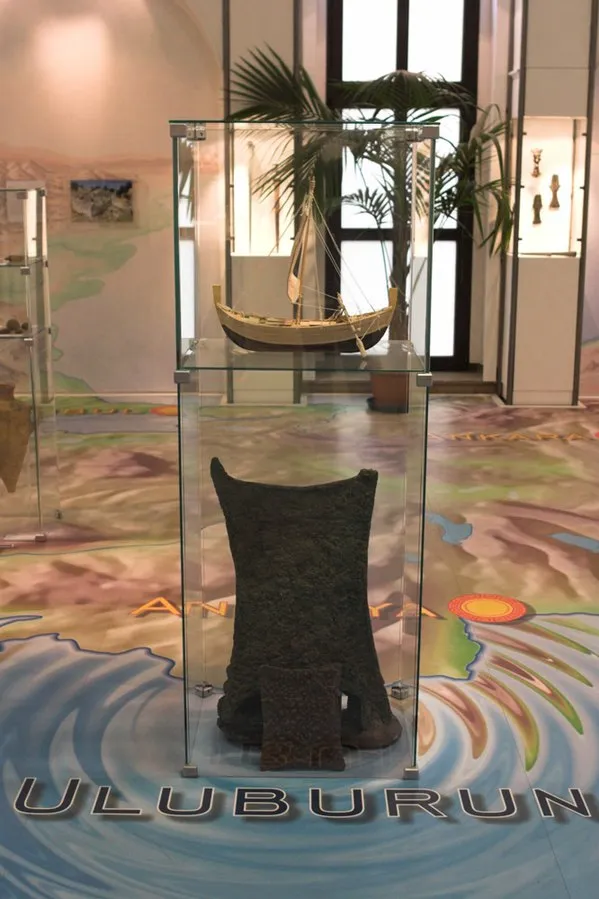
Oxhide ingots are the Late Bronze Age’s signature bulk metal. They pack efficiently, they are liftable by two people, and their ears make lashing to a hull or a donkey straightforward. The Uluburun ingots were stowed in organized rows across dunnage brushwood, both to spread weight and to keep saltwater from abrading the planks. Metallurgy shows that most of the copper came from Cyprus, the dominant supplier to eastern Mediterranean markets. Written tablets from Egypt and the Levant mention copper deliveries by the ton. Uluburun gives those texts a physical counterpart. A single ship could move enough copper for entire seasons of bronze casting at a palace center.
What do the glass ingots tell us about technology and taste?
Glass was still an elite material in the fourteenth century BCE. Uluburun’s disk-ingots represent semi-finished product destined for luxury objects: inlays, beads, small vessels. Blue and turquoise were prized because they evoked lapis lazuli and turquoise without the need to quarry far from the Mediterranean. Compositions and colorants show technological recipes known in Egypt and the Levant. The presence of so much semi-finished glass alongside metals suggests that palatial consumers in the Aegean were not just importing finished fashions, they were commissioning workshops to produce objects in local styles using imported raw materials.
Why were so many jars filled with tree resin?
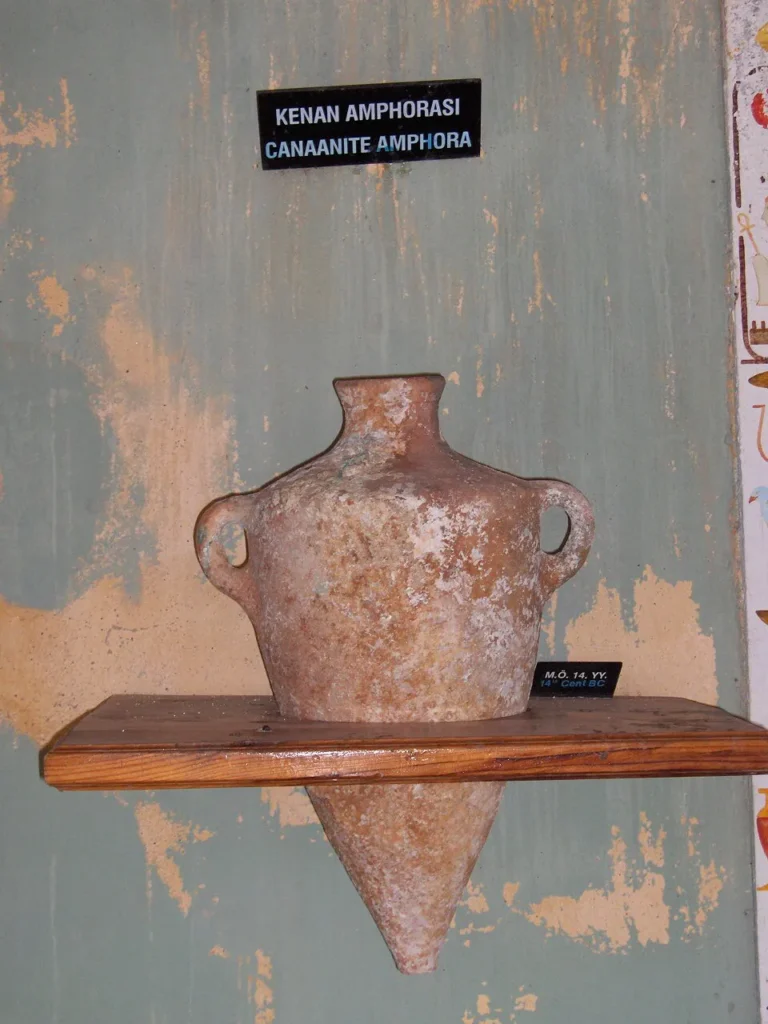
Terebinth resin, derived from Pistacia trees, appears across the cargo. In Egyptian art and texts, terebinth was a listed commodity for perfumes and incense. In the Levant and Aegean, small amounts added to wine can preserve and flavor it. Shipboard storage makes sense: durable jars, relatively stable resin, and a consumer market at both ends. The jars themselves are valuable data. Fabric analysis and form point to northern Levantine kilns. When a ship carries both commodity and container from the same source area, it strengthens the case that this voyage originated somewhere along the Syro-Canaanite coast.
Was this just trade, or something closer to royal gift exchange?
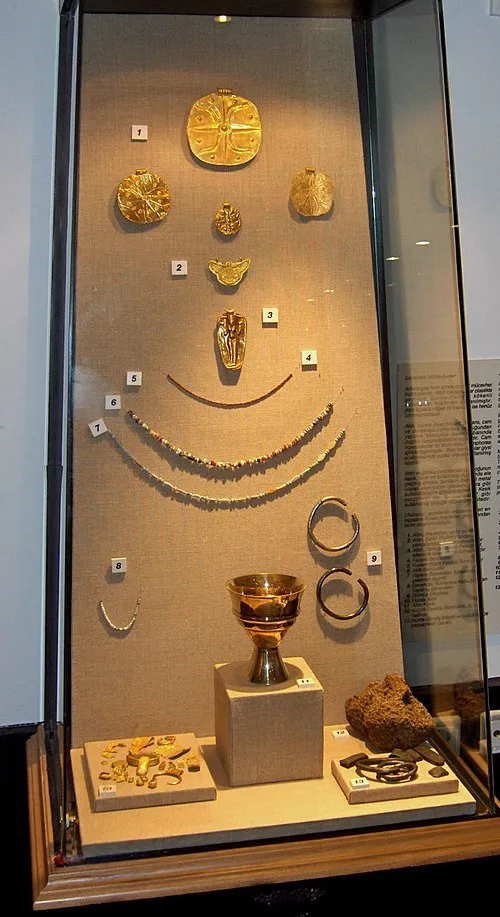
The cargo looks like both. The bulk is raw material: copper, tin, glass, resin. Those are the lifeblood of palace economies, which controlled workshops and armies. Yet the ship also carried gold ornaments, an Egyptian-style gold chalice, and fine carved items that fit sets described in diplomatic letters from the Amarna archive. Balance weights on Near Eastern standards and a portable writing kit point toward a professional, merchant-like team doing accounting, not a simple tax convoy. The most convincing reading is that a court or court-connected consortium assembled a mixed cargo: commodities for redistribution, plus a tray of gifts and samples to smooth relationships with elites along the route.
Who was meant to receive the cargo?
The final destination cannot be proven, but likely markets sit to the west and northwest. Mycenaean pottery is present among the shipboard wares, and certain tools and weapons match Aegean types. The ship hugged the Anatolian coast from the Levant, then rode the summer winds westward. From the Uluburun promontory, a merchant could steer for Rhodes, Crete, and mainland Greek palaces. The oxhide copper would have been welcome at any major workshop. Resin jars could be transshipped or consumed in situ. Luxury packets might be separated out for particular patrons.
What do the small finds reveal about the crew and daily life on board?
Beneath the big-ticket items sits a record of life at sea. Fishhooks, lines, and net weights show opportunistic provisioning. A razor and comb speak to personal grooming. Galley wares, including stirrup jars and ladles, suggest simple meals cooked between anchorages. Seed and nutshell remains point to a varied diet, with nuts and fruits stored for long legs. The writing tablets show that someone kept notes, perhaps of weights delivered or ports called. These details fill out the image of a working merchant crew, not a ceremonial convoy.
How did the ship sink?
There are no signs of burning, and the weapons in the cargo were bundled like goods, not scattered as if hauled out in defense. The slope and anchor finds support a simple, grim scenario: a summer squall or katabatic wind drove the ship toward the headland as the crew tried to ride it out under anchors. A sudden change in wind or a parted line sent the hull into rocks. The stern broke first, heavy cargo followed the fracture down the slope, and the bow slid as the planks opened. The crew likely had minutes, not hours.
How far did the Uluburun network reach?
Cyprus for copper is a given. The Levant for jars, resin, and anchors is secure. Egypt contributed luxury styles and perhaps some glass recipes, as well as the Nefertiti scarab that marks the era. Mycenaean Greece is visible in the tools, weapons, and tableware. Baltic amber beads hint at connections beyond the Mediterranean. Hippopotamus teeth and ivory point to African riverine and savanna trade hubs that funneled materials north. The tin story is still complex, with evidence for multiple sources. When a single ship carries this variety, the only reasonable conclusion is a system capable of moving people, information, and bulky cargo across thousands of kilometers.
How strong is the case for a late fourteenth-century date?
Several independent indicators converge. Radiocarbon and dendrochronology cluster around the 1320s BCE. A scarab naming Nefertiti fits the 1350–1330 BCE frame for her prominence, and need not be brand new at the time of shipment. Pottery parallels in the Aegean and Cyprus underline that window. Glass recipes, tool typologies, and weapon styles match the horizon as well. No element demands a later or earlier date. It is one of the rare archaeological cases where different clocks agree.
What did Uluburun change in Bronze Age studies?
Before Uluburun, scholars debated whether palace economies relied mostly on local resources and small-scale exchange, or whether heavy, routine long-distance trade supplied raw materials. The wreck made the latter hard to deny. Ten tons of copper on one hull implies organized extraction, standardized processing, and predictable markets. The hundreds of glass ingots prove that glassmaking’s supply chain was not limited to single kingdoms. The resin jars point to agricultural products packaged for export. Put together, Uluburun shows a commercial world managed by courts, staffed by professionals, and linked by regular sea routes.
What was the ship’s origin: Levantine, Cypriot, or something else?
The construction points east. Mortise-and-tenon joinery in a shell-first cedar hull with a suite of Syro-Canaanite stone anchors argues for a Levantine shipwright or Cypriot yard using Levantine gear. The cargo’s center of gravity lies in the eastern Mediterranean. The crew likely included Levantine traders, maybe with Aegean passengers or minders. There is no evidence for an Egyptian-built hull. Rather than fixate on a single national origin, it is more accurate to say the ship belonged to a multilingual business culture that worked the sea between Gaza and Mycenae.
How do the balance weights sharpen the picture of trade?
Uluburun produced one of the largest Late Bronze Age weight assemblages known: over a hundred geometric weights and several zoomorphic pieces, including the familiar waterfowl forms. Their standards match Near Eastern shekel systems. The presence of so many weights means transactions were calibrated precisely. Merchants checked copper lots, weighed gold scrap, tallied resin jars by net content, and reconciled accounts at anchorages. The writing tablets sit naturally beside the scales: numbers were written, not only remembered.
Is there any sign of crew religion or ritual aboard?
A handful of small figurines and decorated items might have served as personal protection, but the cargo holds no shrine or explicit ritual set. If there were shipboard offerings, they were likely perishable or small enough to escape detection among thousands of finds. What we do see are the ritual practices of courts on land, implied by the kinds of gifts traveling: gold pendants, carved cosmetics spoons, and prestige metalwork.
Myth vs evidence: did the Nefertiti scarab prove an Egyptian embassy was on board?
The scarab is authentic and bears Nefertiti’s name. It is the only known gold scarab of that queen. It grounds the ship in the Amarna age and hints at the flow of Egyptian styles into Levantine markets. It does not prove an Egyptian diplomatic mission sailed on this hull. Scarabs moved as curios, amulets, and gifts. The safer conclusion is that a Levantine merchant or court official carried Egyptianized items for exchange with Aegean elites.
Can we trace individual hands: merchants, scribes, sailors?
The writing tablet set implies a literate hand taking notes. The weight kit suggests a chief trader or purser. The tools and weapons indicate a crew capable of repair and self-defense, with carpentry as a prized skill. Cooking vessels and food remains belong to all on board. A ship this size probably carried ten to twenty people: a master, a few experienced sailors, and a clutch of apprentices and guards or passengers, perhaps including an Aegean-speaking envoy.
What do the organics, like ivory and hardwood, tell us?
Elephant tusks and hippopotamus teeth traveled from Africa through Levantine ports. Tortoiseshell hints at coastal harvesting. Ostrich eggshells were containers and prestige pieces. Dark hardwood logs, once labeled ebony in early reports, represent desirable cabinet wood moving north. These items rarely survive in terrestrial sites. In a submerged cargo, stabilized by sediment, they preserve the organic half of Bronze Age trade that often vanishes on land.
How do we read the weapons on a merchant ship?
Four swords of different regional types, plus spearheads and dozens of arrowheads, do not make Uluburun a warship. In Late Bronze Age trade, weapons are both commodities and tools of deterrence. Swords in Mycenaean and Italian styles were sought-after goods that also happen to be fit for use if needed. The neat bundles and concentrations of weaponry argue for cargo, not a panicked fight before sinking.
Was there more than one intended market?
Almost certainly. A merchant running west from the Levant could unload part of the cargo at Cyprus, Rhodes, or Crete, then carry the rest to the mainland. Weights and writing tablets suggest partial sales along the way. Goods like resin and copper were divisible; luxury packets could be opened and recombined. Uluburun presents the composite state of a cargo at the moment a voyage failed.
How does Uluburun help us teach the Late Bronze Age?
It anchors abstract ideas in objects. Students and readers can visualize how a ton of tin looks, what a glass ingot feels like, how jars were sealed, and how merchants reconciled accounts at sea. For historians, it ties texts to things: Amarna letters that list gifts and goods, reliefs that show ships under load, tablets that weigh metal to the shekel.
Is there a modern legacy beyond scholarship?
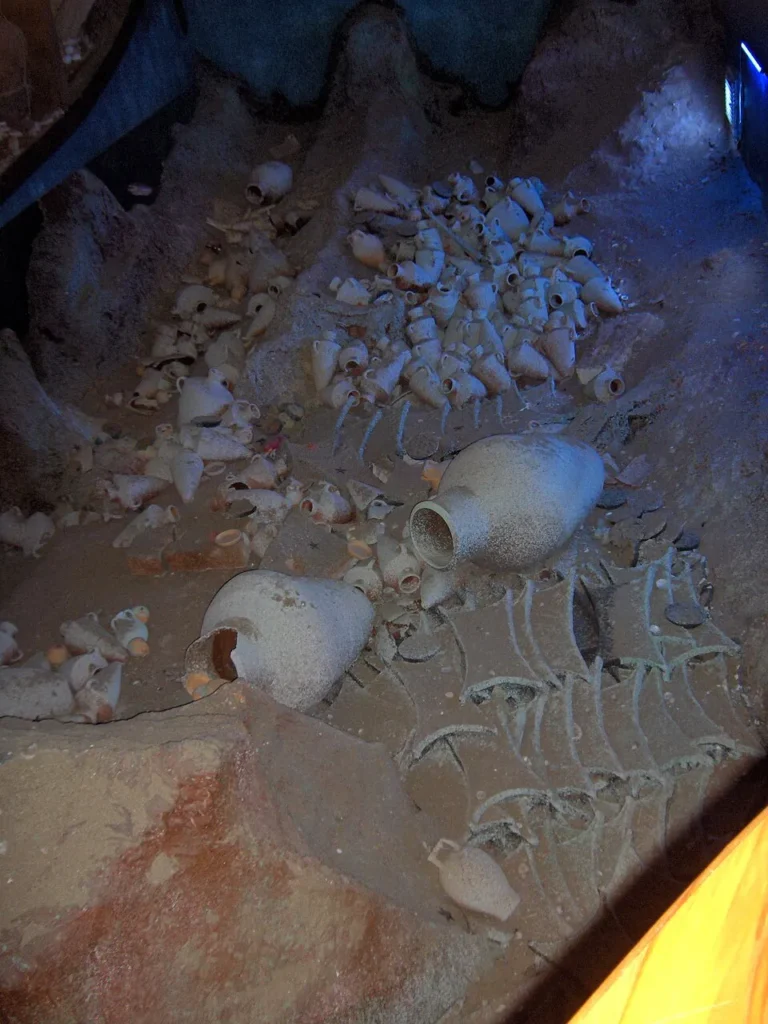
Yes, in museum practice and in maritime heritage. The Bodrum Museum’s conservation of thousands of salt-soaked artifacts set a benchmark for underwater archaeology. The reconstructed hull, displayed with stowage, turns technical reports into a three-dimensional story visitors can walk around. Beyond Turkey, the Uluburun project helped make routine what was once exotic: careful mapping, long conservation timelines, and multidisciplinary analysis for shipwrecks that hold a region’s economy in miniature.
Can a single shipwreck stand for a whole era?
No ship can carry an entire age, but Uluburun comes close for the logistics of the Late Bronze Age. It carried the metals that fed workshops, the glass that colored palaces, the resins that perfumed sanctuaries, and the ornaments that stitched alliances. It held the tools of a working crew and the balance weights of a professional trader. It sailed a coast where small mistakes had big consequences. When it went down, an international network left a snapshot on the seafloor.